


US-MULT-250253

INDICATIONS & IMPORTANT SAFETY INFORMATION:
WARNING: Serious Infections, Mortality, Malignancies, Major Adverse Cardiovascular Events, and Thrombosis
INDICATIONS & IMPORTANT SAFETY INFORMATION1
INDICATION1
RINVOQ is indicated for the treatment of adults with moderately to severely active rheumatoid arthritis (RA) who have had an inadequate response or intolerance to one or more tumor necrosis factor (TNF) blockers.
Limitations of Use: RINVOQ is not recommended for use in combination with other Janus kinase (JAK) inhibitors, biologic disease-modifying antirheumatic drugs (bDMARDs), or with potent immunosuppressants such as azathioprine and cyclosporine.
IMPORTANT SAFETY INFORMATION FOR RINVOQ/RINVOQ LQ (upadacitinib)
SERIOUS INFECTIONS
- Active tuberculosis (TB), which may present with pulmonary or extrapulmonary disease. Test patients for latent TB before RINVOQ use and during therapy. Consider treatment for latent TB infection prior to RINVOQ use.
- Invasive fungal infections, including cryptococcosis and pneumocystosis.
- Bacterial, viral, including herpes zoster, and other infections due to opportunistic pathogens.
MORTALITY
MALIGNANCIES
MAJOR ADVERSE CARDIOVASCULAR EVENTS (MACE)
THROMBOSIS
HYPERSENSITIVITY
GASTROINTESTINAL PERFORATIONS
HYPOGLYCEMIA IN PATIENTS WITH DIABETES
LABORATORY ABNORMALITIES
EMBRYO-FETAL TOXICITY
VACCINATION
MEDICATION RESIDUE IN STOOL
LACTATION
HEPATIC IMPAIRMENT
ADVERSE REACTIONS
STUDY DETAILS & BASELINE CHARACTERISTICS
SELECT-BEYOND
Adults with moderately to severely active RA who had an inadequate response or intolerance to bDMARDs1
RINVOQ is indicated for TNFi-IR patients1
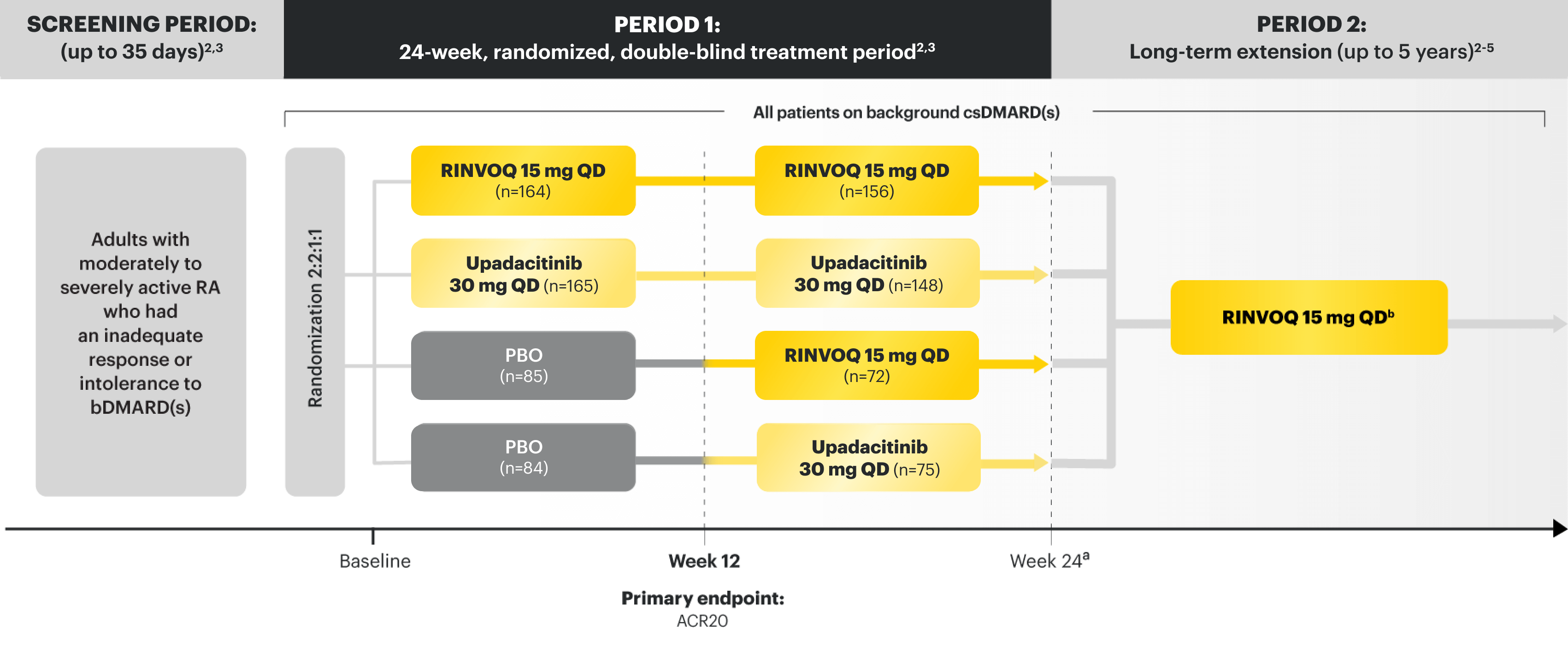
Upadacitinib 30 mg is not an approved dose.
aStarting at Week 24, initiation of or change in corticosteroids, NSAIDs, acetaminophen, and csDMARDs was permitted. Patients not achieving response criteria ≥20% improvement in SJC and TJC at 2 consecutive visits were removed from the study.4,5
bFollowing a protocol amendment, all patients in the long-term extension received UPA 15 mg QD, including those previously on UPA 30 mg.8
PRIMARY ENDPOINT1
- ACR20 response at Week 12
RANKED SECONDARY ENDPOINTS6,7
At Week 12:
- Change from baseline in DAS28-CRP
- Change from baseline in HAQ-DI
- Proportion of patients achieving DAS28-CRP ≤3.2 (LDA)
- Change from baseline in SF-36 (PCS)
SELECT PRESPECIFIED NON-RANKED ENDPOINTS7
- ACR20, ACR50, and ACR70 response at all visits (except those that were ranked timepoints)
- ACR20 response at Week 1
- Proportion of patients achieving CR based on DAS28‑CRP, DAS28‑ESR, SDAI, and CDAI at all visits
- Proportion of patients achieving Boolean criteria at Week 12
DATA LIMITATIONS
Prespecified non-ranked endpoints were not controlled for multiplicity; therefore, treatment differences could represent chance findings. No conclusions regarding these comparisons can be made.
BASELINE CHARACTERISTICS6
| MEAN (SD) OR n (%) | PBO + csDMARDs n=169 | RINVOQ 15 mg + csDMARDs n=164 |
|---|---|---|
| Female, n (%) | 143 (85) | 137 (84) |
| Age (years), mean (SD) | 57.6 (11.4) | 56.3 (11.3) |
| Duration since RA diagnosis (years), mean (SD) | 14.5 (9.2) | 12.4 (9.4) |
| RF+ and/or ACPA+, n (%) | 128 (76) | 131 (80) |
| csDMARD use at baseline* | ||
| - MTX alone,† n (%) | 122 (73) | 118 (73) |
| - MTX plus other csDMARD,‡ n (%) | 17 (10) | 19 (12) |
| - MTX dose§ (mg), mean (SD) | 16.6 (4.7) | 17.3 (4.6) |
| - csDMARD other than MTX, n (%) | 29 (17) | 24 (15) |
| - Missing, n | 1 | 3 |
| Prior bDMARD exposure | ||
| - 1, n (%) | 83 (49) | 86 (52) |
| - 2, n (%) | 46 (27) | 40 (24) |
| - ≥3, n (%) | 40 (24) | 38 (23) |
| Inadequate response or intolerance to ≥1 anti-TNF drug | 152 (90) | 146 (89) |
| - Lack of efficacy with ≥1 bDMARD | 159 (94) | 146 (89) |
| - Lack of efficacy with ≥1 anti-IL-6 | 30 (18) | 27 (16) |
| Oral glucocorticoid use, n (%) | 74 (44) | 83 (51) |
| - Oral glucocorticoid dosell (mg), mean (SD) | 6.3 (2.4) | 5.7 (2.4) |
| TJC68, mean (SD) | 28.5 (15.3) | 27.8 (16.3) |
| SJC66, mean (SD) | 16.3 (9.6) | 17.0 (10.8) |
| PtGA (0-100 mm VAS), mean (SD) | 66.3 (22.7) | 67.2 (19.6) |
| PhGA (0-100 mm VAS), mean (SD) | 66.9 (16.9) | 68.7 (16.6) |
| Pain (0-100 mm VAS), mean (SD) | 68.9 (21.0) | 68.2 (19.8) |
| hsCRP (mg/L), mean (SD) | 16.3 (21.1) | 16.2 (18.6) |
| DAS28-CRP, mean (SD) | 5.8 (1.0) | 5.9 (1.0) |
| HAQ-DI, mean (SD) | 1.6 (0.6) | 1.7 (0.6) |
| CDAI, mean (SD) | 41.0 (13.3) | 41.7 (13.3) |
| SDAI, mean (SD) | 42.6 (13.9) | 43.3 (13.8) |
*Oral or parenteral methotrexate (7.5-25 mg per week).
†Data available for 168 patients receiving placebo and 161 patients receiving RINVOQ 15 mg.
‡All combinations allowed except MTX and leflunomide.
§Mean MTX dose calculated only for patients receiving MTX.
‖Based on prednisone equivalent.
ACPA=anti‑citrullinated protein antibodies; ACR20=improvement of at least 20% in tender joint count, swollen joint count, and at least 3 other core criteria; ACR50=improvement of at least 50% in tender joint count, swollen joint count, and at least 3 other core criteria; ACR70=improvement of at least 70% in tender joint count, swollen joint count, and at least 3 other core criteria; bDMARD=biologic disease‑modifying antirheumatic drug; CDAI=Clinical Disease Activity Index; CR=clinical remission; CRP=C‑reactive protein; csDMARD=conventional synthetic disease‑modifying antirheumatic drug; DAS28-CRP=28-joint disease activity score using C-reactive protein; DAS28-ESR=28-joint disease activity score using erythrocyte sedimentation rate; ESR=erythrocyte sedimentation rate; HAQ‑DI=Health Assessment Questionnaire Disability Index; hsCRP=high‑sensitivity C‑reactive protein; IL-6=interleukin 6; IR=intolerance or inadequate response; LDA=low disease activity; MTX=methotrexate; NSAID=nonsteroidal anti‑inflammatory drug; PBO=placebo; PhGA=physician’s global assessment of disease activity; PtGA=patient’s global assessment of disease activity; QD=once daily; RA=rheumatoid arthritis; RF=rheumatoid factor; SD=standard deviation; SDAI=Simplified Disease Activity Index; SF‑36 (PCS)=36‑item short form health survey physical component summary; SJC66=swollen joint count of 66 joints; TJC68=tender joint count of 68 joints; TNFi=tumor necrosis factor inhibitor; UPA=upadacitinib; VAS=visual analog scale.
REFERENCES:
- RINVOQ [package insert]. North Chicago, IL: AbbVie Inc.
- Genovese MC, Fleischmann R, Combe B, et al. Supplement - Safety and efficacy of upadacitinib in patients with active rheumatoid arthritis refractory to biologic disease-modifying anti-rheumatic drugs (SELECT-BEYOND): a double-blind, randomised controlled phase 3 trial. Lancet. 2018;391(10139):2513-2524. doi:10.1016/S0140-6736(18)31116-4
- Genovese MC, Combe B, Hall S, et al. Upadacitinib in patients with rheumatoid arthritis and inadequate response or intolerance to biological DMARDs: results at 60 weeks [abstract]. Arthritis Rheumatol. 2019;71(suppl 10). Accessed February 5, 2024.
- Data on File. ABVRRTI68669.
- Data on File. ABVRRTI68670.
- Genovese MC, Fleischmann R, Combe B, et al. Safety and efficacy of upadacitinib in patients with active rheumatoid arthritis refractory to biologic disease-modifying anti-rheumatic drugs (SELECT-BEYOND): a double-blind, randomised controlled phase 3 trial. Lancet. 2018;391(10139):2513-2524. doi:10.1016/S0140-6736(18)31116-4
- Data on File. ABVRRTI68842.
- A study to compare upadacitinib (ABT-494) to placebo in adults with rheumatoid arthritis on stable dose of conventional synthetic disease-modifying antirheumatic drugs (csDMARDs) with an inadequate response or intolerance to biologic DMARDs (SELECT-BEYOND). ClinicalTrials.gov identifier: NCT02706847. https://clinicaltrials.gov/ct/show/NCT02706847. Updated February 8, 2023. Accessed February 5, 2024.
SELECT-MONOTHERAPY
Adults with moderately to severely active RA who had an inadequate response to MTX1
RINVOQ is indicated for TNFi-IR patients1
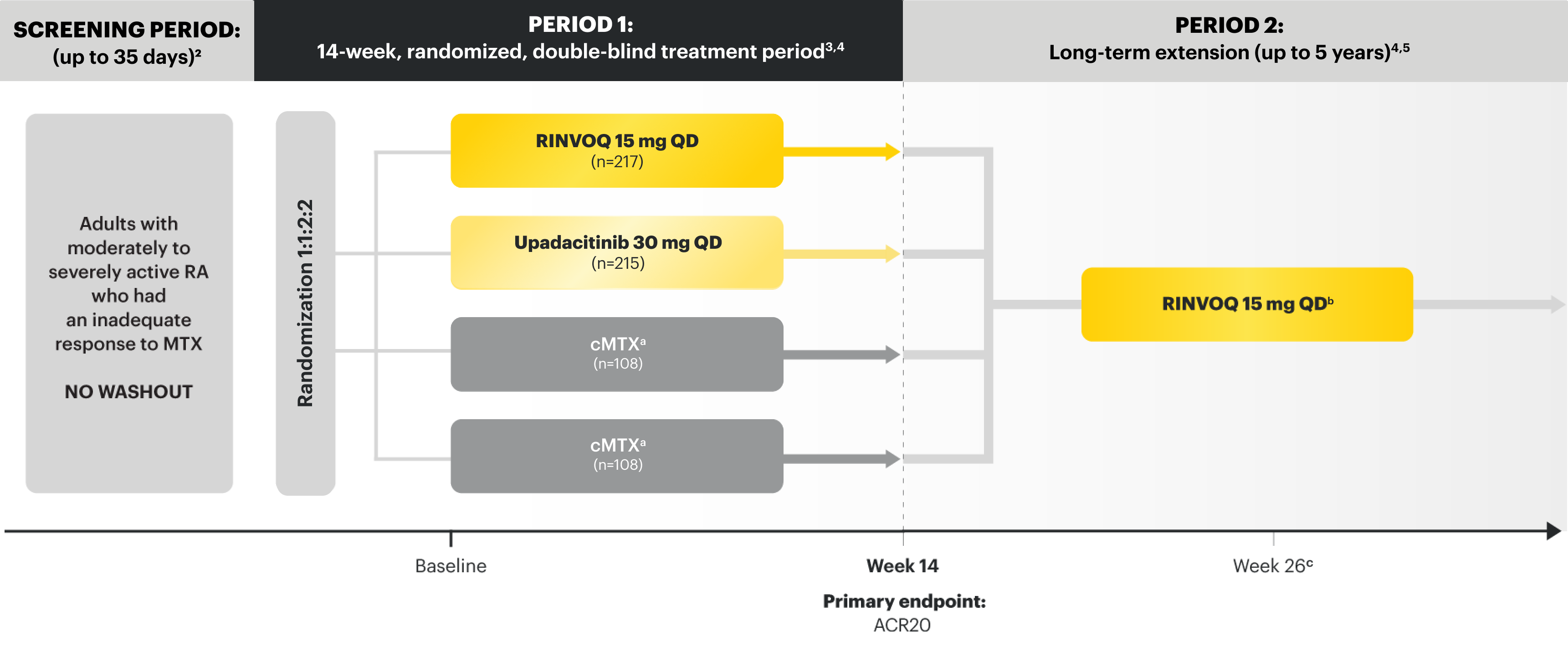
Upadacitinib 30 mg is not an approved dose.
aPatients on cMTX were randomized to receive either RINVOQ 15 mg or upadacitinib 30 mg at Week 14.3
bStarting at Week 26, patients who did not achieve CDAI ≤10 could have initiated or adjusted corticosteroids, NSAIDs, acetaminophen, or ≤2 csDMARDs. Patients who failed to show ≥20% improvement in TJC and SJC compared to baseline at 2 consecutive visits were removed from the study.4
cFollowing a protocol amendment, all patients in the long-term extension received UPA 15 mg QD, including those previously on UPA 30 mg.6
PRIMARY ENDPOINT1
- ACR20 response at Week 14
RANKED SECONDARY ENDPOINTS3,7
At Week 14:
- Change from baseline in DAS28-CRP
- Change from baseline in HAQ-DI
- Change from baseline in SF-36 (PCS)
- Proportion of patients achieving DAS28-CRP ≤3.2 (LDA)
- Proportion of patients achieving DAS28-CRP <2.6 (CR)
SELECT PRESPECIFIED NON-RANKED ENDPOINTS3,7
- ACR50 and ACR70 response at Week 14
- Proportion of patients achieving CR based on DAS28‑CRP <2.6, DAS28-ESR <2.6, SDAI ≤3.3, CDAI ≤2.8, and Boolean criteria at all visits (except those that were ranked timepoints)
DATA LIMITATIONS
Prespecified non-ranked endpoints were not controlled for multiplicity; therefore, treatment differences could represent chance findings. No conclusions regarding these comparisons can be made.
BASELINE CHARACTERISTICS3
| MEAN (SD) OR N (%) | cMTX n=216 | RINVOQ 15 mg QD n=217 |
|---|---|---|
| Female, n (%) | 179 (83) | 174 (80) |
| Age (years) mean (SD) | 55.3 (11.1) | 54.5 (12.2) |
| Duration of RA diagnosis (years), mean (SD) | 5.8 (6.6) | 7.5 (8.9) |
| RF+ and/or ACPA+, n (%) | 169 (78) | 172 (79) |
| Prior MTX dose* (mg/week), mean (SD) | 16.7 (4.4) | 16.8 (4.2) |
| Prior MTX duration (years), mean (SD) | 3.3 (3.9) | 3.8 (4.8) |
| Oral glucocorticoid use, n (%) | 115 (53) | 114 (53) |
| - Oral glucocorticoid dose† (mg), mean (SD) | 6.2 (2.6) | 6.1 (2.5) |
| TJC68, mean (SD) | 25.2 (16.0) | 24.5 (15.1) |
| SJC66, mean (SD) | 16.9 (11.5) | 16.4 (10.9) |
| PtGA (0-100 mm VAS), mean (SD) | 59.6 (21.8) | 62.2 (22.3) |
| PhGA (0-100 mm VAS), mean (SD) | 62.1 (17.5) | 65.7 (18.5) |
| Pain (0-100 mm VAS), mean (SD) | 62.5 (21.3) | 62.3 (22.5) |
| hsCRP (mg/L), mean (SD) | 14.5 (17.3) | 14.0 (16.5) |
| DAS28-CRP, mean (SD) | 5.6 (1.0) | 5.6 (0.9) |
| HAQ-DI, mean (SD) | 1.5 (0.7) | 1.5 (0.7) |
| CDAI, mean (SD) | 37.8 (14.4) | 38.0 (13.1) |
| SDAI, mean (SD) | 39.2 (14.6) | 39.4 (13.4) |
*Prior to receiving study drug. In the control arm, patients continued prior MTX dose as blinded study drug.3
†Prednisone equivalent.
ACPA=anti‑citrullinated protein antibody; ACR=American College of Rheumatology; ACR20=improvement of at least 20% in tender joint count, swollen joint count, and at least 3 other core criteria; ACR50=improvement of at least 50% in tender joint count, swollen joint count, and at least 3 other core criteria; ACR70=improvement of at least 70% in tender joint count, swollen joint count, and at least 3 other core criteria; CDAI=Clinical Disease Activity Index; cMTX=continuous methotrexate; csDMARD=conventional synthetic disease‑modifying antirheumatic drug; CR=clinical remission; CRP=C‑reactive protein; DAS28-CRP=28-joint disease activity score using C-reactive protein; DAS28-ESR=28-joint disease activity score using erythrocyte sedimentation rate; ESR=erythrocyte sedimentation rate; HAQ‑DI=Health Assessment Questionnaire Disability Index; hsCRP=high-sensitivity C‑reactive protein; IR=intolerance or inadequate response; LDA=low disease activity; MTX=methotrexate; NSAID=nonsteroidal anti‑inflammatory drug; PhGA=physician’s global assessment of disease activity; PtGA=patient’s global assessment of disease activity; QD=once daily; RA=rheumatoid arthritis; RF=rheumatoid factor; SD=standard deviation; SDAI=Simplified Disease Activity Index; SF‑36 (PCS)=36-item short form health survey physical component summary; SJC66=swollen joint count of 66 joints; TJC68=tender joint count of 68 joints; TNFi=tumor necrosis factor inhibitor; UPA=upadacitinib; VAS=visual analog scale.
REFERENCES:
- RINVOQ [package insert]. North Chicago, IL: AbbVie Inc.
- Smolen JS, Pangan AL, Emery P, et al. Supplement - Upadacitinib as monotherapy in patients with active rheumatoid arthritis and inadequate response to methotrexate (SELECT-MONOTHERAPY): a randomised, placebo-controlled, double-blind phase 3 study. Lancet. 2019;393(10188):2303-2311. doi:10.1016/S0140-6736(19)30419-2
- Smolen JS, Pangan AL, Emery P, et al. Upadacitinib as monotherapy in patients with active rheumatoid arthritis and inadequate response to methotrexate (SELECT-MONOTHERAPY): a randomised, placebo-controlled, double-blind phase 3 study. Lancet. 2019;393(10188):2303-2311. doi:10.1016/S0140-6736(19)30419-2
- Smolen JS, Emery P, Rigby W, et al. Upadacitinib as monotherapy in patients with rheumatoid arthritis and prior inadequate response to methotrexate: results at 260 weeks from the SELECT-MONOTHERAPY study. Poster presented at: European Congress of Rheumatology; May 31-June 3, 2023; Milan, Italy.
- Data on File. ABVRRTI68979.
- A study comparing upadacitinib (ABT-494) monotherapy to methotrexate (MTX) monotherapy in adults with rheumatoid arthritis (RA) who have an inadequate response to MTX (SELECT-MONOTHERAPY). ClinicalTrials.gov identifier: NCT02706951. https://clinicaltrials.gov/ct2/show/NCT02706951. Updated August 2, 2021. Accessed November 30, 2021.
- Data on File. ABVRRTI68841.
STUDY DETAILS & BASELINE CHARACTERISTICS
SELECT-BEYOND
Adults with moderately to severely active RA who had an inadequate response or intolerance to bDMARDs1
RINVOQ is indicated for TNFi-IR patients
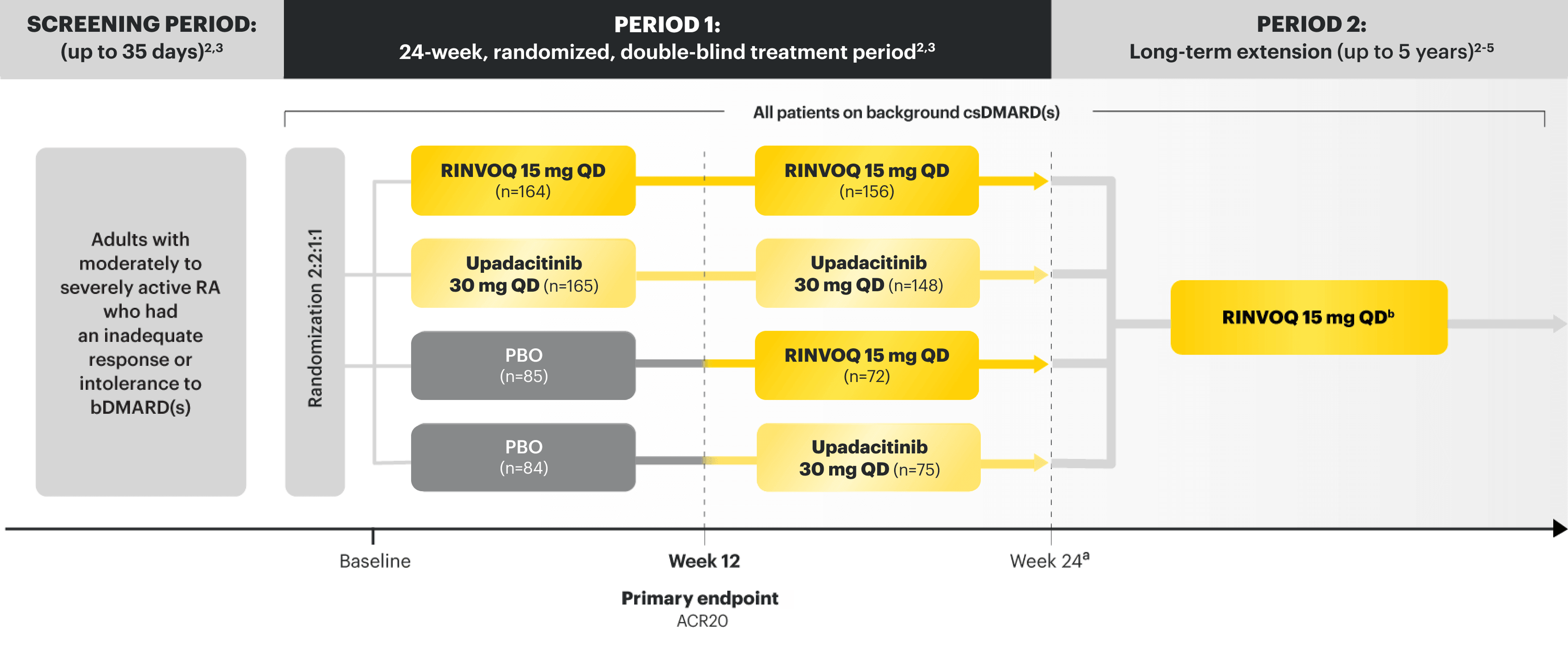
Upadacitinib 30 mg is not an approved dose.
aStarting at Week 24, initiation of or change in corticosteroids, NSAIDs, acetaminophen, and csDMARDs was permitted. Patients not achieving response criteria ≥20% improvement in SJC and TJC at 2 consecutive visits were removed from the study.4,5
bFollowing a protocol amendment, all patients in the long-term extension received UPA 15 mg QD, including those previously on UPA 30 mg.6
PRIMARY ENDPOINT1
- ACR20 response at Week 12
RANKED SECONDARY ENDPOINTS7,8
At Week 12:
- Change from baseline in DAS28-CRP
- Change from baseline in HAQ-DI
- Proportion of patients achieving DAS28-CRP ≤3.2 (LDA)
- Change from baseline in SF-36 (PCS)
SELECT PRESPECIFIED NONRANKED ENDPOINTS8
- ACR20, ACR50, and ACR70 response at all visits (except those that were ranked timepoints)
- ACR20 response at Week 1
- Proportion of patients achieving CR based on DAS28‑CRP, DAS28‑ESR, SDAI, and CDAI at all visits
- Proportion of patients achieving Boolean criteria at Week 12
DATA LIMITATIONS
Prespecified nonranked endpoints were not controlled for multiplicity; therefore, treatment differences could represent chance findings. No conclusions regarding these comparisons can be made.
BASELINE CHARACTERISTICS7
| MEAN (SD) OR n (%) | PBO + csDMARDs n=169 | RINVOQ 15 mg + csDMARDs n=164 |
|---|---|---|
| Female, n (%) | 143 (85) | 137 (84) |
| Age (years), mean (SD) | 57.6 (11.4) | 56.3 (11.3) |
| Duration of RA diagnosis (years), mean (SD) | 14.5 (9.2) | 12.4 (9.4) |
| RF+ and/or ACPA+, n (%) | 128 (76) | 131 (80) |
| csDMARD use at baseline* | ||
| - MTX alone,† n (%) | 122 (73) | 118 (73) |
| - MTX plus other csDMARD,‡ n (%) | 17 (10) | 19 (12) |
| - MTX dose§ (mg), mean (SD) | 16.6 (4.7) | 17.3 (4.6) |
| - csDMARD other than MTX, n (%) | 29 (17) | 24 (15) |
| - Missing, n | 1 | 3 |
| Prior bDMARD exposure | ||
| - 1, n (%) | 83 (49) | 86 (52) |
| - 2, n (%) | 46 (27) | 40 (24) |
| - ≥3, n (%) | 40 (24) | 38 (23) |
| Inadequate response or intolerance to ≥1 anti-TNF drug | 152 (90) | 146 (89) |
| - Lack of efficacy with ≥1 bDMARD | 159 (94) | 146 (89) |
| - Lack of efficacy with ≥1 anti–IL-6 | 30 (18) | 27 (16) |
| Oral glucocorticoid use, n (%) | 74 (44) | 83 (51) |
| - Oral glucocorticoid dosell (mg), mean (SD) | 6.3 (2.4) | 5.7 (2.4) |
| TJC68, mean (SD) | 28.5 (15.3) | 27.8 (16.3) |
| SJC66, mean (SD) | 16.3 (9.6) | 17.0 (10.8) |
| PtGA (0–100 mm VAS), mean (SD) | 66.3 (22.7) | 67.2 (19.6) |
| PhGA (0–100 mm VAS), mean (SD) | 66.9 (16.9) | 68.7 (16.6) |
| Pain (0–100 mm VAS), mean (SD) | 68.9 (21.0) | 68.2 (19.8) |
| hsCRP (mg/L), mean (SD) | 16.3 (21.1) | 16.2 (18.6) |
| DAS28-CRP, mean (SD) | 5.8 (1.0) | 5.9 (1.0) |
| HAQ-DI, mean (SD) | 1.6 (0.6) | 1.7 (0.6) |
| CDAI, mean (SD) | 41.0 (13.3) | 41.7 (13.3) |
| SDAI, mean (SD) | 42.6 (13.9) | 43.3 (13.8) |
*Oral or parenteral methotrexate (7.5–25 mg per week).
†Data available for 168 patients receiving placebo and 161 patients receiving RINVOQ 15 mg.
‡All combinations allowed except MTX and leflunomide.
§Mean MTX dose calculated only for patients receiving MTX.
‖Based on prednisone equivalent.
ACPA=anti‑citrullinated protein antibody; ACR20=improvement of at least 20% in tender joint count, swollen joint count, and at least 3 other core criteria; ACR50=improvement of at least 50% in tender joint count, swollen joint count, and at least 3 other core criteria; ACR70=improvement of at least 70% in tender joint count, swollen joint count, and at least 3 other core criteria; bDMARD=biologic disease‑modifying antirheumatic drug; CDAI=Clinical Disease Activity Index; CR=clinical remission; CRP=C‑reactive protein; csDMARD=conventional synthetic disease‑modifying antirheumatic drug; DAS28-CRP=28-joint disease activity score using C-reactive protein; DAS28-ESR=28-joint disease activity score using erythrocyte sedimentation rate; ESR=erythrocyte sedimentation rate; HAQ‑DI=Health Assessment Questionnaire Disability Index; hsCRP=high‑sensitivity C‑reactive protein; IL-6=interleukin 6; IR=intolerance or inadequate response; LDA=low disease activity; MTX=methotrexate; NSAID=nonsteroidal anti‑inflammatory drug; PBO=placebo; PhGA=Physician’s Global Assessment; PtGA=patient global assessment; QD=once daily; RA=rheumatoid arthritis; RF=rheumatoid factor; SD=standard deviation; SDAI=Simplified Disease Activity Index; SF‑36 (PCS)=36‑item short form health survey physical component summary; SJC66=swollen joint count of 66 joints; TJC68=tender joint count of 68 joints; TNFi=tumor necrosis factor inhibitor; UPA=upadacitinib; VAS=visual analog scale
REFERENCES:
- RINVOQ [package insert]. North Chicago, IL: AbbVie Inc.
- Genovese MC, Fleischmann R, Combe B, et al. Supplement - Safety and efficacy of upadacitinib in patients with active rheumatoid arthritis refractory to biologic disease-modifying anti-rheumatic drugs (SELECT-BEYOND): a double-blind, randomised controlled phase 3 trial. Lancet. 2018;391(10139):2513-2524. doi:10.1016/S0140-6736(18)31116-4
- Genovese M, Combe B, Hall S, et al. Upadacitinib in patients with rheumatoid arthritis and inadequate response or intolerance to biological DMARDs: results at [60 weeks] from the SELECT-BEYOND study. Poster presented at: The European Congress of Rheumatology, 12-15 June 2019, Madrid, Spain.
- Data on file, AbbVie Inc. ABVRRTI68669.
- Data on file, AbbVie Inc. ABVRRTI68670.
- A study to compare upadacitinib (ABT-494) to placebo in adults with rheumatoid arthritis on stable dose of conventional synthetic disease-modifying antirheumatic drugs (csDMARDs) with an inadequate response or intolerance to biologic DMARDs (SELECT-BEYOND). ClinicalTrials.gov identifier. NCT02706847. https://clinicaltrials.gov/ct/show/NCT02706847. Updated February 8, 2023. Accessed February 5, 2024.
- Genovese MC, Fleischmann R, Combe B, et al. Safety and efficacy of upadacitinib in patients with active rheumatoid arthritis refractory to biologic disease-modifying anti-rheumatic drugs (SELECT-BEYOND): a double-blind, randomised controlled phase 3 trial. Lancet. 2018;391(10139):2513-2524. doi:10.1016/S0140-6736(18)31116-4
- Data on file, AbbVie Inc. ABVRRTI68842.
SELECT-COMPARE
Adults with moderately to severely active RA who had an inadequate response to MTX1
RINVOQ is indicated for TNFi-IR patients
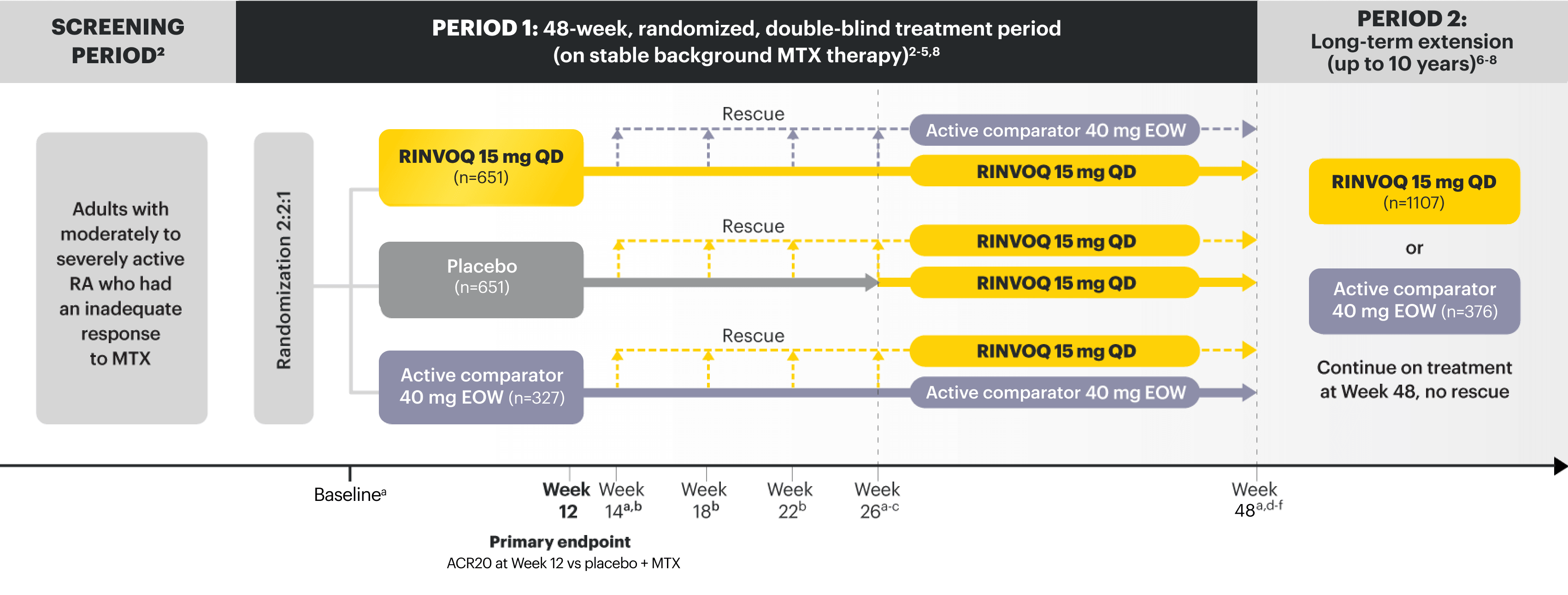
aX-ray imaging was performed at these time points; Week 14 for nonresponder patients, who were rescued.2,3
bRescue criteria: At Weeks 14, 18, and 22 if <20% improvement in TJC and SJC vs baseline; at Week 26, all remaining PBO patients were switched to RINVOQ, and patients receiving RINVOQ or active comparator were switched to active comparator or RINVOQ, respectively, if CDAI >10.2
cStarting at Week 26, initiation or change in background RA medication(s), including corticosteroids, NSAIDs, or acetaminophen was permitted.4
dStarting at Week 48, patients who failed to show ≥20% improvement in TJC and SJC compared to baseline at 2 consecutive visits were removed from the study.5
eAt Week 48, initiation or change in csDMARDs was allowed; however, not all patients received background MTX.5
fPatients continued treatment with UPA or active comparator in a blinded manner until the last patient completed the Week 48 visit and received open-label treatment thereafter.8
PRIMARY ENDPOINT1
- ACR20 response: RINVOQ 15 mg + MTX vs placebo + MTX at Week 12
SELECT RANKED SECONDARY ENDPOINTS2
At Week 12 vs placebo + MTX:
- Change from baseline in DAS28-CRP
- Change from baseline in HAQ-DI
- Change from baseline in SF-36 (PCS)
- Proportion of patients achieving DAS28-CRP ≤3.2 (LDA)
- Proportion of patients achieving DAS28-CRP <2.6 (CR)
At Week 26 vs placebo + MTX:
- Change from baseline mTSS
SELECT PRESPECIFIED NONRANKED ENDPOINTS3,9,10
- ACR20/50/70 response rates and change from baseline in individual ACR components at all visits (except those that were ranked timepoints)
- Proportion of patients achieving CR based on DAS28-CRP, DAS28-ESR, SDAI, CDAI, and Boolean criteria at all visits (except those that were ranked timepoints)
- Proportion of patients with no radiographic progression (mTSS ≤0) at Week 26, Week 48, and Week 96
- Change from baseline in mTSS at Week 26, Week 48, and Week 96
- Change from baseline in joint space narrowing (JSN) and joint erosion score at Week 26, Week 48, and Week 96
DATA LIMITATIONS
Prespecified nonranked endpoints were not controlled for multiplicity; therefore, treatment differences could represent chance findings. No conclusions regarding these comparisons can be made.
SELECT-COMPARE was not designed to evaluate the efficacy of active comparator + MTX vs placebo + MTX. No conclusions regarding this comparison can be made.
BASELINE CHARACTERISTICS3,11
| MEAN (SD) OR n (%) | PBO + MTX n=651 | RINVOQ 15 mg QD + MTX n=651 |
|---|---|---|
| Female, n (%) | 512 (79) | 521 (80) |
| Age (years), mean (SD) | 54 (12) | 54 (12) |
| Duration of RA diagnosis (years), mean (SD) | 8 (8) | 8 (8) |
| RF+ and/or ACPA+, n (%) | 571 (88) | 566 (87) |
| MTX dose (mg/week), mean (SD) | 16.8 (3.8) | 17.0 (4.2) |
| Prior bDMARD use, n (%) | 63 (10) | 54 (8) |
| Oral glucocorticoid use, n (%) | 392 (60) | 388 (60) |
| - Dose (mg),* mean (SD) | 6.3 (2.4) | 6.2 (2.3) |
| TJC68, mean (SD) | 26 (14) | 26 (15) |
| SJC66, mean (SD) | 16 (9) | 17 (10) |
| PtGA (0–100 mm VAS), mean (SD) | 64 (21) | 64 (22) |
| PhGA (0–100 mm VAS), mean (SD) | 66 (18) | 66 (17) |
| Pain (0–100 mm VAS), mean (SD) | 65 (21) | 66 (21) |
| hsCRP (mg/L), mean (SD) | 18 (22) | 18 (22) |
| DAS28-CRP, mean (SD) | 5.8 (0.9) | 5.8 (1.0) |
| DAS28-ESR, mean (SD) | 6.5 (1.0) | 6.4 (1.0) |
| HAQ-DI, mean (SD) | 1.6 (0.6) | 1.6 (0.6) |
| CDAI, mean (SD) | 40 (13) | 40 (13) |
| SDAI, mean (SD) | 41.8 (13.3) | 41.5 (13.6) |
| mTSS, mean (SD) | 36 (52) | 34 (50) |
| - Erosion Score, mean (SD) | 17 (27) | 17 (26) |
| - Joint Space Narrowing Score, mean (SD) | 19 (26) | 18 (25) |
*Based on prednisone equivalent.
ACPA=anti-citrullinated protein antibody; ACR=American College of Rheumatology; ACR20=improvement of at least 20% in tender joint count, swollen joint count, and at least 3 other core criteria; ACR50=improvement of at least 50% in tender joint count, swollen joint count, and at least 3 other core criteria; ACR70=improvement of at least 70% in tender joint count, swollen joint count, and at least 3 other core criteria; bDMARD=biologic disease‑modifying antirheumatic drug; CCP=cyclic citrullinated peptide; CDAI=Clinical Disease Activity Index; CR=clinical remission; CRP=C‑reactive protein; csDMARD=conventional synthetic disease-modifying antirheumatic drug; DAS28-CRP=28-joint disease activity score using C-reactive protein; DAS28-ESR=28-joint disease activity score using erythrocyte sedimentation rate; EOW=every other week; ESR=erythrocyte sedimentation rate; HAQ‑DI=Health Assessment Questionnaire Disability Index; hsCRP=high-sensitivity C‑reactive protein; IR=intolerance or inadequate response; JE=joint erosion; JSN=joint space narrowing; LDA=low disease activity; mTSS=modified total Sharp score; MTX=methotrexate; NSAID=nonsteroidal anti-inflammatory drug; PBO=placebo; PhGA=Physician's Global Assessment; PtGA=patient global assessment; QD=once per day; RA=rheumatoid arthritis; RF=rheumatoid factor; SD=standard deviation; SDAI=Simplified Disease Activity Index; SF‑36 (PCS)=36-item short form health survey physical component summary; SJC66=swollen joint count of 66 joints; TJC68=tender joint count of 68 joints; TNFi=tumor necrosis factor inhibitor; UPA=upadacitinib; VAS=visual analog scale
REFERENCES:
- RINVOQ [package insert]. North Chicago, IL: AbbVie Inc.
- Fleischmann R, Pangan AL, Song I-H, et al. Supplement - Upadacitinib versus placebo or adalimumab in patients with rheumatoid arthritis and an inadequate response to methotrexate: results of a phase III, double-blind, randomized controlled trial. Arthritis Rheumatol. 2019;71(11):1788-1800. doi:10.1002/art.41032
- Fleischmann R, Pangan AL, Song I-H, et al. Upadacitinib versus placebo or adalimumab in patients with rheumatoid arthritis and an inadequate response to methotrexate: results of a phase III, double-blind, randomized controlled trial. Arthritis Rheumatol. 2019;71(11):1788-1800. doi:10.1002/art.41032
- Data on file, AbbVie Inc. ABVRRTI70534.
- Data on file, AbbVie Inc. ABVRRTI70955.
- Data on file, AbbVie Inc. ABVRRTI68439.
- Upadacitinib meets all primary and ranked secondary endpoints including superiority versus adalimumab in phase 3 study in rheumatoid arthritis. AbbVie Inc. https://news.abbvie.com/2018-04-09-Upadacitinib-Meets-All-Primary-and-Ranked-Secondary-Endpoints-Including-Superiority-Versus-Adalimumab-in-Phase-3-Study-in-Rheumatoid-Arthritis. April 9, 2018. Accessed August 15, 2019.
- Fleischmann R, Mysler E, Bessette L, et al. Long-term safety and efficacy of upadacitinib or adalimumab in patients with rheumatoid arthritis: results at 3 years from the SELECT-COMPARE study. Poster presented at: American College of Rheumatology Convergence; November 5-9, 2021; e-Congress.
- Data on file, AbbVie Inc. ABVRRTI68440.
- Data on file, AbbVie Inc. ABVRRTI70956.
- Fleischmann R, Pangan AL, Mysler E, et al. A phase 3, randomized, double-blind study comparing upadacitinib to placebo and to adalimumab, in patients with active rheumatoid arthritis with inadequate response to methotrexate. Oral presentation at: ACR Annual Meeting 2018; October 21, 2018; Chicago, IL.
SELECT-MONOTHERAPY
Adults with moderately to severely active RA who had an inadequate response to MTX1
RINVOQ is indicated for TNFi-IR patients
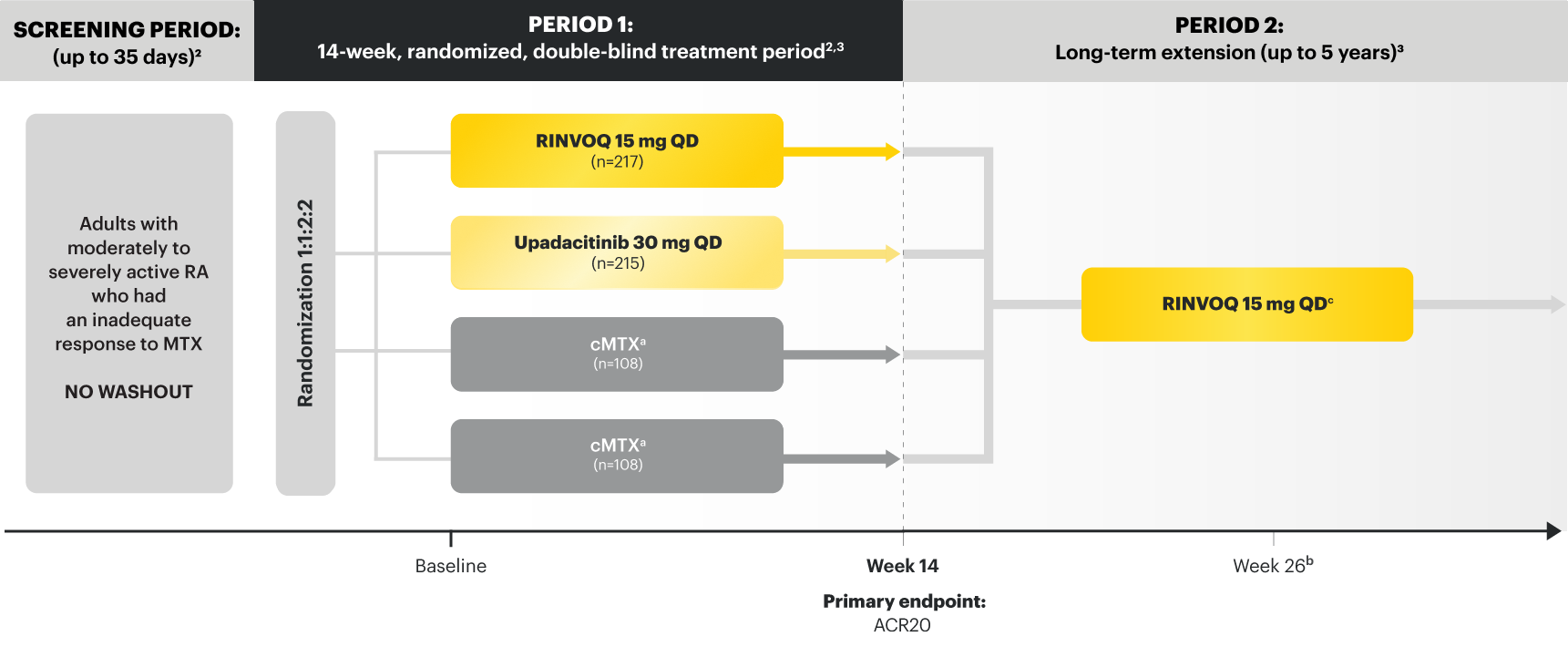
Upadacitinib 30 mg is not an approved dose.
aPatients on MTX were randomized to receive either RINVOQ 15 mg or upadacitinib 30 mg at Week 14.2
bStarting at Week 26, patients who did not achieve CDAI ≤10 could have initiated or adjusted corticosteroids, NSAIDs, acetaminophen, or ≤2 csDMARDs. Patients who failed to show ≥20% improvement in TJC and SJC compared to baseline at 2 consecutive visits were removed from the study.4
cFollowing a protocol amendment, all patients in the long-term extension received UPA 15 mg QD, including those previously on UPA 30 mg.5
PRIMARY ENDPOINT1
- ACR20 response at Week 14
RANKED SECONDARY ENDPOINTS2,6
At Week 14:
- Change from baseline in DAS28-CRP
- Change from baseline in HAQ-DI
- Change from baseline in SF-36 (PCS)
- Proportion of patients achieving DAS28-CRP ≤3.2 (LDA)
- Proportion of patients achieving DAS28-CRP <2.6 (CR)
SELECT PRESPECIFIED NONRANKED ENDPOINTS2,6
- ACR50 and ACR70 response at Week 14
- Proportion of patients achieving CR based on DAS28‑CRP <2.6, DAS28-ESR <2.6, SDAI ≤3.3, CDAI ≤2.8, and Boolean criteria at all visits (except those that were ranked timepoints)
DATA LIMITATIONS
Prespecified nonranked endpoints were not controlled for multiplicity; therefore, treatment differences could represent chance findings. No conclusions regarding these comparisons can be made.
BASELINE CHARACTERISTICS2
| MEAN (SD) OR n (%) | cMTX n=216 | RINVOQ 15 mg QD n=217 |
|---|---|---|
| Female, n (%) | 179 (83) | 174 (80) |
| Age (years), mean (SD) | 55.3 (11.1) | 54.5 (12.2) |
| Duration of RA diagnosis (years), mean (SD) | 5.8 (6.6) | 7.5 (8.9) |
| RF+ and/or ACPA+, n (%) | 169 (78) | 172 (79) |
| Prior MTX dose* (mg/week), mean (SD) | 16.7 (4.4) | 16.8 (4.2) |
| Prior MTX duration (years), mean (SD) | 3.3 (3.9) | 3.8 (4.8) |
| Oral glucocorticoid use, n (%) | 115 (53) | 114 (53) |
| - Oral glucocorticoid dose† (mg), mean (SD) | 6.2 (2.6) | 6.1 (2.5) |
| TJC68, mean (SD) | 25.2 (16.0) | 24.5 (15.1) |
| SJC66, mean (SD) | 16.9 (11.5) | 16.4 (10.9) |
| PtGA (0–100 mm VAS), mean (SD) | 59.6 (21.8) | 62.2 (22.3) |
| PhGA (0–100 mm VAS), mean (SD) | 62.1 (17.5) | 65.7 (18.5) |
| Pain (0–100 mm VAS), mean (SD) | 62.5 (21.3) | 62.3 (22.5) |
| hsCRP (mg/L), mean (SD) | 14.5 (17.3) | 14.0 (16.5) |
| DAS28-CRP, mean (SD) | 5.6 (1.0) | 5.6 (0.9) |
| HAQ-DI, mean (SD) | 1.5 (0.7) | 1.5 (0.7) |
| CDAI, mean (SD) | 37.8 (14.4) | 38.0 (13.1) |
| SDAI, mean (SD) | 39.2 (14.6) | 39.4 (13.4) |
*Prior to receiving study drug. In the control arm, patients continued prior MTX dose as blinded study drug.
†Prednisone equivalent.
ACPA=anti‑citrullinated protein antibody; ACR=American College of Rheumatology; ACR20=improvement of at least 20% in tender joint count, swollen joint count, and at least 3 other core criteria; ACR50=improvement of at least 50% in tender joint count, swollen joint count, and at least 3 other core criteria; ACR70=improvement of at least 70% in tender joint count, swollen joint count, and at least 3 other core criteria; CDAI=Clinical Disease Activity Index; cMTX=continuous methotrexate; csDMARD=conventional synthetic disease‑modifying antirheumatic drug; CR=clinical remission; CRP=C‑reactive protein; DAS28-CRP=28-joint disease activity score using C-reactive protein; DAS28-ESR=28-joint disease activity score using erythrocyte sedimentation rate; ESR=erythrocyte sedimentation rate; HAQ‑DI=Health Assessment Questionnaire Disability Index; hsCRP=high-sensitivity C‑reactive protein; IR=intolerance or inadequate response; LDA=low disease activity; MTX=methotrexate; NSAID=nonsteroidal anti‑inflammatory drug; PhGA=Physician’s Global Assessment; PtGA=patient global assessment; QD=once daily; RA=rheumatoid arthritis; RF=rheumatoid factor; SD=standard deviation; SDAI=Simplified Disease Activity Index; SF‑36 (PCS)=36-item short form health survey physical component summary; SJC66=swollen joint count of 66 joints; TJC68=tender joint count of 68 joints; TNFi=tumor necrosis factor inhibitor; UPA=upadacitinib; VAS=visual analog scale
REFERENCES:
- RINVOQ [package insert]. North Chicago, IL: AbbVie Inc.
- Smolen JS, Pangan AL, Emery P, et al. Upadacitinib as monotherapy in patients with active rheumatoid arthritis and inadequate response to methotrexate (SELECT-MONOTHERAPY): a randomised, placebo-controlled, double-blind phase 3 study. Lancet. 2019;393(10188):2303-2311. doi:10.1016/S0140-6736(19)30419-2
- Smolen JS, Emery P, Rigby W, et al. Upadacitinib as monotherapy in patients with rheumatoid arthritis: results at 48 weeks from the SELECT-MONOTHERAPY study. Poster presented at: The European Congress of Rheumatology; June 12-15, 2019; Madrid, Spain.
- Data on file, AbbVie Inc. ABVRRTI68979.
- A study comparing upadacitinib (ABT-494) monotherapy to methotrexate (MTX) monotherapy in adults with rheumatoid arthritis (RA) who have an inadequate response to MTX (SELECT-MONOTHERAPY). ClinicalTrials.gov Identifier: NCT02706951. Updated August 2, 2021. Accessed July 14, 2023. https://clinicaltrials.gov/ct2/show/NCT02706951.
- Data on file, AbbVie Inc. ABVRRTI68841.
SELECT-SWITCH
Adults with moderately to severely active RA who had an inadequate response or intolerance to 1 TNFi (excluding adalimumab)1,2
RINVOQ is indicated for TNFi-IR patients
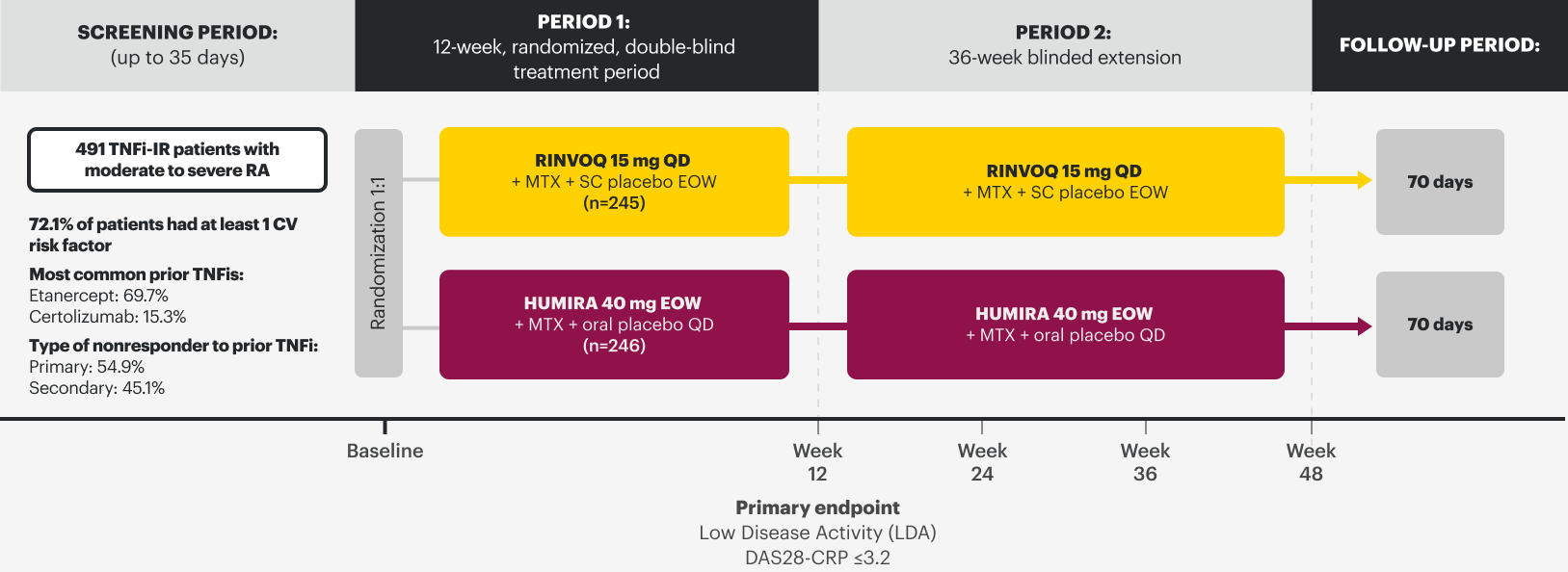
PRIMARY ENDPOINT1
- Achievement of DAS28-CRP ≤3.2: RINVOQ 15 mg + MTX vs HUMIRA 40 mg + MTX at Week 12 (superiority)
SELECT RANKED SECONDARY ENDPOINTS1
At Week 12 vs HUMIRA:
- Achievement of ACR50 (superiority)
- Achievement of DAS28-CRP <2.6 (superiority)
- Change from baseline in DAS28-CRP (superiority)
- Change from baseline in Pt-pain (superiority)
- Change from baseline in HAQ-DI (superiority)
SELECT PRESPECIFIED NONRANKED ENDPOINTS1
At all visits, including Week 48:
- Achievement of LDA, remission (based on DAS28-CRP, DAS28-ESR, CDAI, and SDAI), Boolean remission, ACR20, ACR50, and ACR70
- Change from baseline in DAS28-CRP, DAS28-ESR, CDAI, SDAI, and ACR individual components
- Achievement of change from baseline in HAQ-DI ≤-0.22 and HAQ-DI ≤-0.3
- Achievement of HAQ-DI <0.5
- Change from baseline in FACIT-Fatigue at all specified visits
BASELINE
CHARACTERISTICS1-4
| MEAN (SD) Unless otherwise stated |
RINVOQ 15 mg QD + MTX (n=245) | HUMIRA 40 mg EOW + MTX (n=246)* |
|---|---|---|
| Parameter | ||
| Age (years) | 55.3 (12.7) | 55.9 (12.5) |
| Age ≥65 years, n (%) | 57 (23.3) | 72 (29.3) |
| Female, n (%) | 189 (77.1) | 191 (77.6) |
| BMI (kg/m2) | 29.4 (6.5) | 28.8 (7.0) |
| RA duration since diagnosis (years) | 10.1 (8.5) (n=244) | 10.3 (9.3) |
| Patient History, n (%) | ||
| HZ vaccination | 35 (14.6) | 31 (12.8) |
| History of VTE | 2 (0.8) | 2 (0.8) |
| History of CV eventa | 18 (7.3) | 11 (4.5) |
| Number of CV risk factorsb, n (%) | ||
| 0 | 72 (29.4) | 65 (26.4) |
| 1 | 94 (38.4) | 107 (43.5) |
| 2 | 58 (23.7) | 61 (24.8) |
| 3+ | 21 (8.6) | 13 (5.3) |
| CV risk factors at baseline, n (%) | ||
| Hypertension | 90 (36.7) | 85 (34.6) |
| Diabetes mellitus | 6 (2.4) | 2 (0.8) |
| History of tobacco/nicotine use (current/former) | 89 (36.3) | 77 (31.3) |
| Elevated LDL-Cc | 42 (17.1) | 65 (26.4) |
| Low HDL-Cd | 36 (14.7) | 32 (13.0) |
| Duration of exposure on prior TNFi (days) | ||
| Median | 305 | 338 |
| Prior TNFi administered, n (%) | ||
| Etanercept | 167 (68.2) | 175 (71.1) |
| Certolizumab | 40 (16.3) | 35 (14.2) |
| Golimumab | 24 (9.8) | 21 (8.5) |
| Infliximab | 15 (6.1) | 13 (5.3) |
| Adalimumab† | 0 | 1 (0.4) |
| Disease Characteristics | ||
| DAS28-CRP | 5.7 (0.8) (n=235) | 5.7 (0.8) (n=236) |
| DAS28-ESR | 6.3 (0.9) (n=234) | 6.4 (0.9) (n=235) |
| TJC68 | 22.4 (12.3) | 22.8 (12.6) |
| SJC66 | 15.5 (6.6) | 15.9 (8.3) |
| hsCRP (mg/L) | 16.8 (25.4) | 14.0 (17.6) |
| ESR (mm/hr) | 37.1 (23.4) (n=243) | 38.9 (24.4) (n=245) |
| PtGA (0–10 NRS) | 7.1 (1.9) (n=235) | 7.4 (1.9) (n=236) |
| PhGA (0–10 NRS) | 7.0 (1.6) | 6.9 (1.6) |
| Pain (0–10 NRS) | 7.4 (1.9) (n=234) | 7.4 (1.9) (n=232) |
| HAQ-DI | 1.6 (0.6) (n=234) | 1.6 (0.6) (n=234) |
| FACIT-Fatigue | 26.8 (11.5) (n=234) | 26.8 (10.5) (n=233) |
| Concomitant Therapies | ||
| Patients receiving oral corticosteroid at baseline, n (%) | 99 (40.4) | 100 (40.7) |
| Oral steroid dose (prednisone equivalent) at baseline (mg/day) | 6.4 (2.7) (n=99) | 6.7 (3.2) (n=100) |
| MTX dose at baseline (mg/week), median | 15.0 | 15.0 (n=245) |
| NSAIDs | 128 (52.2) | 111 (45.1) |
| Reason for discontinuation of prior TNFi, n (%) | ||
| Intolerance | 25 (10.2) | 27 (11.0) |
| Inadequate response | 220 (89.8) | 219 (89.0) |
| Type of inadequate response to prior TNFi, n (%) | ||
| Primary nonresponder | 121 (55.8) | 115 (54.0) |
| Secondary nonresponder | 96 (44.2) | 98 (46.0) |
| Missing | 3 | 6 |
*Patients entered the study while receiving a stable dose of MTX (15–25 mg/week). MTX was not considered an ancillary drug in the study.
†Protocol deviations.5
aThis includes any CV events (MACE and other CV events).
bCV risk factors included CV event, hypertension, diabetes mellitus, tobacco/nicotine use, elevated LDL-C, and lowered HDL‑C.
c≥3.36 mmol/L (ie, >129.9 mg/dL).
d<1.034 mmol/L (ie, <18.6 mg/dL).
ACR=American College of Rheumatology; BMI=body mass index; CDAI=Clinical Disease Activity Index; CRP=C-reactive protein; CV=cardiovascular; DAS28-CRP=Disease Activity Score in 28 joints using C-reactive protein; DAS28-ESR=28-joint Disease Activity Score using erythrocyte sedimentation rate; EOW=every other week; ESR=erythrocyte sedimentation rate; FACIT-Fatigue=Functional Assessment of Chronic Illness Therapy-Fatigue; HAQ-DI=Health Assessment Questionnaire Disability Index; HDL-C=high-density lipoprotein cholesterol; hsCRP=high-sensitivity C-reactive protein; HZ=herpes zoster; IR=intolerance or inadequate response; LDA=low disease activity; LDL-C=low-density lipoprotein cholesterol; MACE=major adverse cardiovascular event; MTX=methotrexate; NSAID=nonsteroidal anti-inflammatory drug; PhGA=Physician's Global Assessment; PtGA=patient global assessment; primary nonresponder=patient who did not respond to prior TNFi treatment; QD=once daily; RA=rheumatoid arthritis; SC=subcutaneous; SD=standard deviation; SDAI=Simplified Disease Activity Index; secondary nonresponder=patient who initially responded to prior TNFi treatment but lost response over time; SJC66=swollen joint count of 66 joints; TJC68=tender joint count of 68 joints; TNFi=tumor necrosis factor inhibitor; VTE=venous thromboembolism
REFERENCES:
- Mysler E, Sidiropoulos PI, Balanescu A, et al. Upadacitinib vs adalimumab in patients with rheumatoid arthritis and a prior inadequate response or intolerance to a tumour necrosis factor inhibitor: 12-week results from the randomised, double-blind, SELECT-SWITCH study. Ann Rheum Dis. 2026 Apr 15:S0003-4967(26)00198-6.
- Mysler E, Sidiropoulos PI, Balanescu A, et al. Supplement - Upadacitinib vs adalimumab in patients with rheumatoid arthritis and a prior inadequate response or intolerance to a tumour necrosis factor inhibitor: 12-week results from the randomised, double-blind, SELECT-SWITCH study. Ann Rheum Dis. 2026 Apr 15:S0003-4967(26)00198-6.
- Data on file, AbbVie Inc. ABVRRTI82077.
- Data on file, AbbVie Inc. ABVRRTI83281.
- AbbVie Inc. Protocol M23-700. SELECT-SWITCH. EUCT number 2022-502578-18-00. Accessed November 21, 2025. https://euclinicaltrials.eu/ctis-public/view/2022-502578-18-00.
SELECT-EARLY
Adults with moderately to severely active RA who were MTX‑naïve1
RINVOQ is indicated for TNFi-IR patients
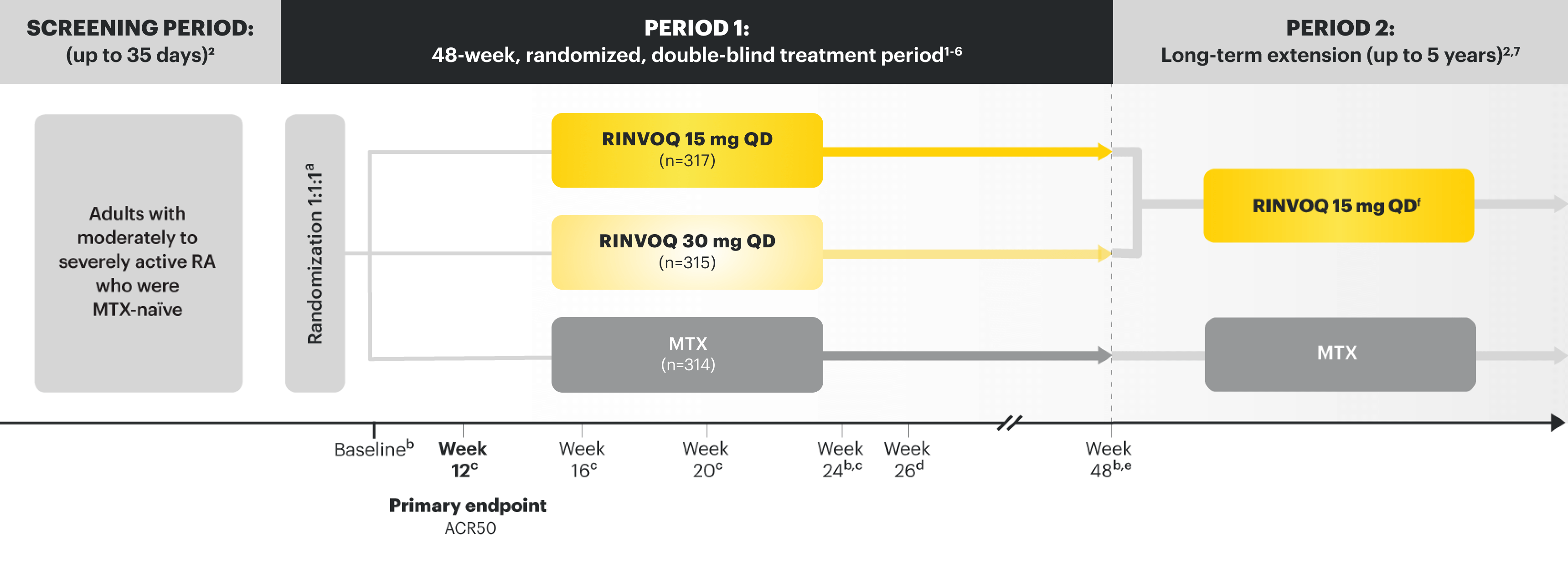
Upadacitinib 30 mg is not an approved dose.
aInitially 947 patients were randomized in the study, but 2 patients were never dosed.
bX-ray images of hands and feet obtained at these time points.2
cStarting at Week 12, patients with ≤20% improvement in TJC and SJC compared to baseline at 2 consecutive visits continued blinded therapy and optimized background RA medications (corticosteroids, NSAIDs, and/or low‑potency analgesics).3,4
dAt Week 26, patients with CDAI ≤2.8 continued their original study drug; background medications (NSAIDs, corticosteroids, and/or low‑potency analgesics, and csDMARDs) were optimized in patients with CDAI >2.8 but ≥20% improvement in TJC and SJC; among patients with CDAI >2.8 and <20% improvement in TJC and SJC, RINVOQ 15 mg or upadacitinib 30 mg was added by rerandomization according to 1:1 ratio for those initially randomized to MTX, and MTX was added for those initially randomized to RINVOQ 15 mg or upadacitinib 30 mg.2,5
eStarting at Week 48, patients who did not achieve ≥20% improvement in both TJC and SJC at 2 consecutive visits were removed from the study. Initiation of or change in background RA medications (NSAIDs, corticosteroids, low-potency analgesics, and csDMARDs; not all patients received background MTX) was allowed at any time during Period 2.6
fFollowing a protocol amendment, all patients in the long-term extension who were previously receiving UPA 30 mg received UPA 15 mg.8
PRIMARY ENDPOINT1
- ACR50 response at Week 12
RANKED SECONDARY ENDPOINTS3,11
At Week 12:
- Change from baseline in DAS28-CRP
- Change from baseline in HAQ-DI
- Proportion of patients achieving DAS28-CRP ≤3.2 (LDA)
- Change from baseline in SF-36 (PCS)
At Week 24:
- Change from baseline in mTSS
- Proportion of patients achieving DAS28-CRP <2.6 (CR)
SELECT PRESPECIFIED NONRANKED ENDPOINTS2,3,10,11
- ACR20/50/70 at all visits (except those that were ranked timepoints)
- Change from baseline in mTSS at Week 24, Week 48, and Week 96
- Proportion of patients with no radiographic progression (mTSS ≤0) at Week 24, Week 48, and Week 96
- Change from baseline in JE and JSN scores at Week 24, Week 48, and Week 96
DATA LIMITATIONS
Prespecified nonranked endpoints were not controlled for multiplicity; therefore, treatment differences could represent chance findings. No conclusions regarding these comparisons can be made.
BASELINE CHARACTERISTICS3
| MEAN (SD) OR N (%) | MTX n=314 | RINVOQ 15 mg QD n=317 |
|---|---|---|
| Female, n (%) | 240 (76) | 241 (76) |
| Age (years), mean (SD) | 53.3 (12.9) | 51.9 (12.6) |
| Duration since RA diagnosis (years), mean (SD) | 2.6 (5.1) | 2.9 (5.4) |
| RF+ and/or ACPA+, n (%) | 255 (81) | 279 (88) |
| MTX exposure, n (%) | 19 (6) | 30 (9.5) |
| csDMARD exposure, n (%) | 79 (25) | 80 (25) |
| Oral glucocorticoid use, n (%) | 163 (52) | 147 (46) |
| - Dose (mg),* mean (SD) | 6.4 (2.4) | 6.4 (3.1) |
| TJC68, mean (SD) | 26.4 (16.2) | 25.4 (14.4) |
| SJC66, mean (SD) | 16.9 (10.6) | 16.9 (10.4) |
| PtGA (0–100 mm VAS), mean (SD) | 65.8 (21.5) | 66.6 (22.0) |
| PhGA (0–100 mm VAS), mean (SD) | 68.7 (16.5) | 67.1 (17.0) |
| Pain (0–100 mm VAS), mean (SD) | 65.7 (21.5) | 68.4 (20.6) |
| hsCRP (mg/L), mean (SD) | 21.2 (22.1) | 23.0 (27.4) |
| DAS28-CRP, mean (SD) | 5.9 (1.0) | 5.9 (1.0) |
| HAQ-DI, mean (SD) | 1.6 (0.7) | 1.6 (0.7) |
| CDAI, mean (SD) | 40.5 (13.3) | 40.4 (13.3) |
| SDAI, mean (SD) | 42.6 (14.0) | 42.7 (13.9) |
| mTSS, mean (SD) | 13.3 (30.6) | 18.1 (38.2) |
| - Erosion Score, mean (SD) | 6.1 (15.5) | 8.6 (19.3) |
| - Joint Space Narrowing Score, mean (SD) | 7.2 (16.2) | 9.6 (20.1) |
*Prednisone equivalent dose in patients receiving oral glucocorticoids at baseline.
ACPA=anti-citrullinated protein antibody; ACR=American College of Rheumatology; ACR20=improvement of at least 20% in tender joint count, swollen joint count, and at least 3 other core criteria; ACR50=improvement of at least 50% in tender joint count, swollen joint count, and at least 3 other core criteria; ACR70=improvement of at least 70% in tender joint count, swollen joint count, and at least 3 other core criteria; CDAI=Clinical Disease Activity Index; CR=clinical remission; CRP=C-reactive protein; csDMARD=conventional synthetic disease-modifying antirheumatic drug; DAS28-CRP=28-joint disease activity score using C-reactive protein; HAQ-DI=Health Assessment Questionnaire Disability Index; hsCRP=high-sensitivity C-reactive protein; IR=intolerance or inadequate response; JE=joint erosion; JSN=joint space narrowing; LDA=low disease activity; mTSS=modified total Sharp score; MTX=methotrexate; NSAID=nonsteroidal anti-inflammatory drug; PhGA=Physician's Global Assessment; PtGA=patient global assessment; QD=once daily; RA=rheumatoid arthritis; RF=rheumatoid factor; SD=standard deviation; SDAI=Simplified Disease Activity Index; SF-36 (PCS)=36-item short form health survey physical component summary; SJC66=swollen joint count of 66 joints; TJC68=tender joint count of 68 joints; TNFi=tumor necrosis factor inhibitor; UPA=upadacitinib; VAS=visual analog scale
REFERENCES:
- RINVOQ [package insert]. North Chicago, IL: AbbVie Inc.
- van Vollenhoven R, Takeuchi T, Pangan AL, et al. Supplement: Efficacy and safety of upadacitinib monotherapy in methotrexate-naive patients with moderately-to-severely active rheumatoid arthritis (SELECT-EARLY): a multicenter, multi-country, randomized, double-blind, active comparator–controlled trial. Arthritis Rheumatol. 2020;72(10):1607-1620. doi:10.1002/art.41384
- van Vollenhoven R, Takeuchi T, Pangan AL, et al. Efficacy and safety of upadacitinib monotherapy in methotrexate-naive patients with moderately-to-severely active rheumatoid arthritis (SELECT-EARLY): a multicenter, multi-country, randomized, double-blind, active comparator–controlled trial. Arthritis Rheumatol. 2020;72(10):1607-1620. doi:10.1002/art.41384
- Data on file, AbbVie Inc. ABVRRTI70661.
- Data on file, AbbVie Inc. ABVRRTI68563.
- Data on file, AbbVie Inc. ABVRRTI70953.
- van Vollenhoven R, Takeuchi T, Pangan A, et al. THU197 Monotherapy with upadacitinib in MTX-naïve patients with rheumatoid arthritis; results at 48 weeks from the SELECT-EARLY study. Ann Rheum Dis. 2019;78:376-377.
- A study to compare upadacitinib (ABT-494) monotherapy to methotrexate (MTX) monotherapy in adults with rheumatoid arthritis (RA) who have not previously taken methotrexate (SELECT-EARLY). ClinicalTrials.gov identifier: NCT02706873. https://clinicaltrials.gov/ct2/show/NCT02706873. Updated August 2, 2021. Accessed November 30, 2021.
- Data on file, AbbVie Inc. ABVRRTI68564.
- Data on file, AbbVie Inc. ABVRRTI70539.
- Data on file, AbbVie Inc. ABVRRTI70954.
SELECT-NEXT
Adults with moderately to severely active RA who had an inadequate response to csDMARD(s)1
RINVOQ is indicated for TNFi-IR patients
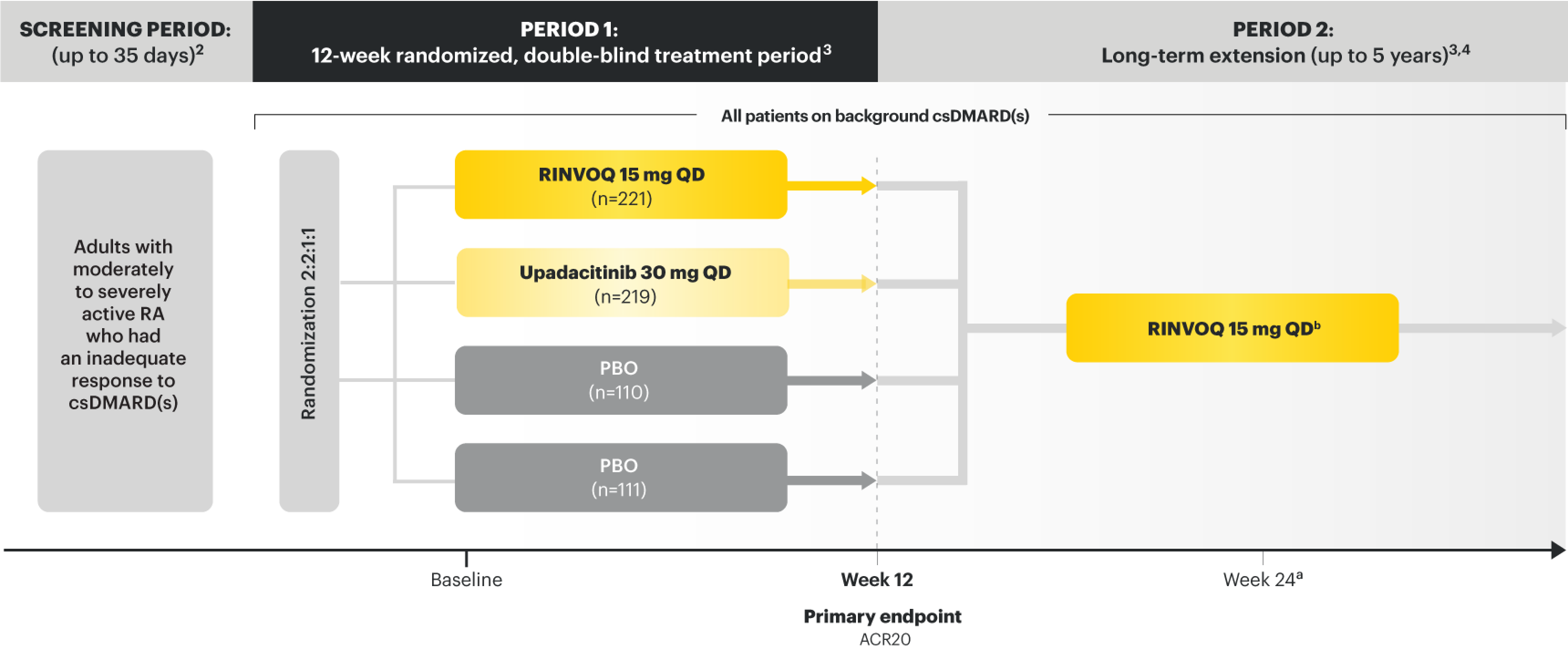
Upadacitinib 30 mg is not an approved dose.
aStarting at Week 24, patients who did not achieve CDAI ≤10 could have initiated or adjusted corticosteroids, NSAIDs, acetaminophen, or ≤2 csDMARDs. Patients who failed to show ≥20% improvement in TJC and SJC compared to baseline at 2 consecutive visits were removed from the study.4
bFollowing a protocol amendment, all patients in the long-term extension received UPA 15 mg QD, including those previously on UPA 30 mg.5
PRIMARY ENDPOINT1
- ACR20 response at Week 12
RANKED SECONDARY ENDPOINTS6,7
At Week 12:
- Proportion of patients achieving DAS28-CRP ≤3.2 (LDA)
- Proportion of patients achieving DAS28-CRP <2.6 (CR)
- Proportion of patients achieving CDAl ≤10 (LDA)
SELECT PRESPECIFIED NONRANKED ENDPOINTS7
- ACR50 and ACR70 response at Week 12
- ACR20 response at Week 1
DATA LIMITATIONS
Prespecified nonranked endpoints were not controlled for multiplicity; therefore, treatment differences could represent chance findings. No conclusions regarding these comparisons can be made.
BASELINE CHARACTERISTICS6
| MEAN (SD) OR N (%) | PBO + csDMARDs n=221 | RINVOQ 15 mg QD + csDMARDs n=221 |
|---|---|---|
| Female, n (%) | 166 (75) | 182 (82) |
| Age (years), mean (SD) | 56.0 (12.2) | 55.3 (11.5) |
| Duration of RA diagnosis (years), mean (SD) | 7.2 (7.5) | 7.3 (7.9) |
| RF+ and/or ACPA+, n (%) | 181 (82) | 184 (83) |
| csDMARD use at baseline | ||
| - MTX alone, n (%) | 141 (64) | 122 (55) |
| - MTX plus other csDMARD, n (%) | 49 (22) | 47 (21) |
| - csDMARD other than MTX, n (%) | 30 (14) | 51 (23) |
| - Missing, n (%) | 1 (<1) | 1 (<1) |
| Prior bDMARD exposure, n (%) | 29 (13) | 27 (12) |
| Oral glucocorticoid use, n (%) | 106 (48) | 96 (43) |
| - Oral glucocorticoid dose* (mg), mean (SD) | 6.3 (2.6) | 6.0 (2.4) |
| TJC68, mean (SD) | 24.7 (15.0) | 25.2 (13.8) |
| SJC66, mean (SD) | 15.4 (9.2) | 16.0 (10.0) |
| PtGA (0–100 mm VAS), mean (SD) | 60.3 (20.5) | 63.1 (21.9) |
| PhGA (0–100 mm VAS), mean (SD) | 64.4 (17.7) | 64.3 (16.2) |
| Pain (0–100 mm VAS), mean (SD) | 61.5 (20.8) | 64.1 (19.5) |
| hsCRP (mg/L), mean (SD) | 12.6 (14.0) | 16.6 (19.2) |
| DAS28-CRP, mean (SD) | 5.6 (0.8) | 5.7 (1.0) |
| HAQ-DI, mean (SD) | 1.4 (0.6) | 1.5 (0.6) |
| CDAI, mean (SD) | 37.8 (11.8) | 38.3 (11.9) |
| SDAI, mean (SD) | 39.0 (11.9) | 39.9 (12.5) |
*Based on prednisone equivalent.
ACPA=anti-citrullinated protein antibody; ACR=American College of Rheumatology; ACR20=improvement of at least 20% in tender joint count, swollen joint count, and at least 3 other core criteria; ACR50=improvement of at least 50% in tender joint count, swollen joint count, and at least 3 other core criteria; ACR70=improvement of at least 70% in tender joint count, swollen joint count, and at least 3 other core criteria; bDMARD=biologic disease-modifying antirheumatic drug; CDAI=Clinical Disease Activity Index; CR=clinical remission; CRP=C-reactive protein; csDMARD=conventional synthetic disease-modifying antirheumatic drug; DAS28-CRP=28-joint disease activity score using C-reactive protein; HAQ-DI=Health Assessment Questionnaire Disability Index; hsCRP=high-sensitivity C-reactive protein; IR=intolerance or inadequate response; JE=joint erosion; JSN=joint space narrowing; LDA=low disease activity; MTX=methotrexate; NSAID=nonsteroidal anti-inflammatory drug; PBO=placebo; PhGA=Physician's Global Assessment; PtGA=patient global assessment; QD=once daily; RA=rheumatoid arthritis; RF=rheumatoid factor; SD=standard deviation; SDAI=Simplified Disease Activity Index; SJC66=swollen joint count of 66 joints; TJC68=tender joint count of 68 joints; TNFi=tumor necrosis factor inhibitor; UPA=upadacitinib; VAS=visual analog scale
REFERENCES:
- RINVOQ [package insert]. North Chicago, IL: AbbVie Inc.
- Burmester GR, Kremer JM, Van den Bosch F, et al. Supplement - Safety and efficacy of upadacitinib in patients with rheumatoid arthritis and inadequate response to conventional synthetic disease-modifying anti-rheumatic drugs (SELECT-NEXT): a randomised, double-blind, placebo-controlled phase 3 trial. Lancet. 2018;391(10139):2503-2512. doi:10.1016/S0140-6736(18)31115-2
- Burmester GR, Van den Bosch F, Bessette L, et al. Long-term safety and efficacy of upadacitinib in patients with rheumatoid arthritis and an inadequate response to csDMARDs: results at 60 weeks from the SELECT-NEXT study. Poster presented at: The European Congress of Rheumatology; June 12-15, 2019; Madrid, Spain.
- Data on file, AbbVie Inc. ABVRRTI68981.
- Data on file, AbbVie Inc. ABVRRTI73233.
- Burmester GR, Kremer JM, Van den Bosch F, et al. Safety and efficacy of upadacitinib in patients with rheumatoid arthritis and inadequate response to conventional synthetic disease-modifying anti-rheumatic drugs (SELECT-NEXT): a randomised, double-blind, placebo-controlled phase 3 trial. Lancet. 2018;391(10139):2503-2512. doi:10.1016/S0140-6736(18)31115-2
- Data on file, AbbVie Inc. ABVRRTI68843.
US-RNQR-260674
STUDY DETAILS & BASELINE CHARACTERISTICS
SELECT-BEYOND
Adults with moderately to severely active RA who had an inadequate response or intolerance to bDMARDs1
RINVOQ is indicated for TNFi-IR patients
Upadacitinib 30 mg is not an approved dose.
aStarting at Week 24, initiation of or change in corticosteroids, NSAIDs, acetaminophen, and csDMARDs was permitted. Patients not achieving response criteria ≥20% improvement in SJC and TJC at 2 consecutive visits were removed from the study.4,5
bFollowing a protocol amendment, all patients in the long-term extension received UPA 15 mg QD, including those previously on UPA 30 mg.6
PRIMARY ENDPOINT1
- ACR20 response at Week 12
RANKED SECONDARY ENDPOINTS7,8
At Week 12:
- Change from baseline in DAS28-CRP
- Change from baseline in HAQ-DI
- Proportion of patients achieving DAS28-CRP ≤3.2 (LDA)
- Change from baseline in SF-36 (PCS)
SELECT PRESPECIFIED NONRANKED ENDPOINTS8
- ACR20, ACR50, and ACR70 response at all visits (except those that were ranked timepoints)
- ACR20 response at Week 1
- Proportion of patients achieving CR based on DAS28‑CRP, DAS28‑ESR, SDAI, and CDAI at all visits
- Proportion of patients achieving Boolean criteria at Week 12
DATA LIMITATIONS
Prespecified nonranked endpoints were not controlled for multiplicity; therefore, treatment differences could represent chance findings. No conclusions regarding these comparisons can be made.
BASELINE CHARACTERISTICS7
| MEAN (SD) OR n (%) | PBO + csDMARDs n=169 | RINVOQ 15 mg + csDMARDs n=164 |
|---|---|---|
| Female, n (%) | 143 (85) | 137 (84) |
| Age (years), mean (SD) | 57.6 (11.4) | 56.3 (11.3) |
| Duration of RA diagnosis (years), mean (SD) | 14.5 (9.2) | 12.4 (9.4) |
| RF+ and/or ACPA+, n (%) | 128 (76) | 131 (80) |
| csDMARD use at baseline* | ||
| - MTX alone,† n (%) | 122 (73) | 118 (73) |
| - MTX plus other csDMARD,‡ n (%) | 17 (10) | 19 (12) |
| - MTX dose§ (mg), mean (SD) | 16.6 (4.7) | 17.3 (4.6) |
| - csDMARD other than MTX, n (%) | 29 (17) | 24 (15) |
| - Missing, n | 1 | 3 |
| Prior bDMARD exposure | ||
| - 1, n (%) | 83 (49) | 86 (52) |
| - 2, n (%) | 46 (27) | 40 (24) |
| - ≥3, n (%) | 40 (24) | 38 (23) |
| Inadequate response or intolerance to ≥1 anti-TNF drug | 152 (90) | 146 (89) |
| - Lack of efficacy with ≥1 bDMARD | 159 (94) | 146 (89) |
| - Lack of efficacy with ≥1 anti–IL-6 | 30 (18) | 27 (16) |
| Oral glucocorticoid use, n (%) | 74 (44) | 83 (51) |
| - Oral glucocorticoid dosell (mg), mean (SD) | 6.3 (2.4) | 5.7 (2.4) |
| TJC68, mean (SD) | 28.5 (15.3) | 27.8 (16.3) |
| SJC66, mean (SD) | 16.3 (9.6) | 17.0 (10.8) |
| PtGA (0–100 mm VAS), mean (SD) | 66.3 (22.7) | 67.2 (19.6) |
| PhGA (0–100 mm VAS), mean (SD) | 66.9 (16.9) | 68.7 (16.6) |
| Pain (0–100 mm VAS), mean (SD) | 68.9 (21.0) | 68.2 (19.8) |
| hsCRP (mg/L), mean (SD) | 16.3 (21.1) | 16.2 (18.6) |
| DAS28-CRP, mean (SD) | 5.8 (1.0) | 5.9 (1.0) |
| HAQ-DI, mean (SD) | 1.6 (0.6) | 1.7 (0.6) |
| CDAI, mean (SD) | 41.0 (13.3) | 41.7 (13.3) |
| SDAI, mean (SD) | 42.6 (13.9) | 43.3 (13.8) |
*Oral or parenteral methotrexate (7.5–25 mg per week).
†Data available for 168 patients receiving placebo and 161 patients receiving RINVOQ 15 mg.
‡All combinations allowed except MTX and leflunomide.
§Mean MTX dose calculated only for patients receiving MTX.
‖Based on prednisone equivalent.
ACPA=anti‑citrullinated protein antibody; ACR20=improvement of at least 20% in tender joint count, swollen joint count, and at least 3 other core criteria; ACR50=improvement of at least 50% in tender joint count, swollen joint count, and at least 3 other core criteria; ACR70=improvement of at least 70% in tender joint count, swollen joint count, and at least 3 other core criteria; bDMARD=biologic disease‑modifying antirheumatic drug; CDAI=Clinical Disease Activity Index; CR=clinical remission; CRP=C‑reactive protein; csDMARD=conventional synthetic disease‑modifying antirheumatic drug; DAS28-CRP=28-joint disease activity score using C-reactive protein; DAS28-ESR=28-joint disease activity score using erythrocyte sedimentation rate; ESR=erythrocyte sedimentation rate; HAQ‑DI=Health Assessment Questionnaire Disability Index; hsCRP=high‑sensitivity C‑reactive protein; IL-6=interleukin 6; IR=intolerance or inadequate response; LDA=low disease activity; MTX=methotrexate; NSAID=nonsteroidal anti‑inflammatory drug; PBO=placebo; PhGA=Physician’s Global Assessment; PtGA=patient global assessment; QD=once daily; RA=rheumatoid arthritis; RF=rheumatoid factor; SD=standard deviation; SDAI=Simplified Disease Activity Index; SF‑36 (PCS)=36‑item short form health survey physical component summary; SJC66=swollen joint count of 66 joints; TJC68=tender joint count of 68 joints; TNFi=tumor necrosis factor inhibitor; UPA=upadacitinib; VAS=visual analog scale
REFERENCES:
- RINVOQ [package insert]. North Chicago, IL: AbbVie Inc.
- Genovese MC, Fleischmann R, Combe B, et al. Supplement - Safety and efficacy of upadacitinib in patients with active rheumatoid arthritis refractory to biologic disease-modifying anti-rheumatic drugs (SELECT-BEYOND): a double-blind, randomised controlled phase 3 trial. Lancet. 2018;391(10139):2513-2524. doi:10.1016/S0140-6736(18)31116-4
- Genovese M, Combe B, Hall S, et al. Upadacitinib in patients with rheumatoid arthritis and inadequate response or intolerance to biological DMARDs: results at [60 weeks] from the SELECT-BEYOND study. Poster presented at: The European Congress of Rheumatology, 12-15 June 2019, Madrid, Spain.
- Data on file, AbbVie Inc. ABVRRTI68669.
- Data on file, AbbVie Inc. ABVRRTI68670.
- A study to compare upadacitinib (ABT-494) to placebo in adults with rheumatoid arthritis on stable dose of conventional synthetic disease-modifying antirheumatic drugs (csDMARDs) with an inadequate response or intolerance to biologic DMARDs (SELECT-BEYOND). ClinicalTrials.gov identifier. NCT02706847. https://clinicaltrials.gov/ct/show/NCT02706847. Updated February 8, 2023. Accessed February 5, 2024.
- Genovese MC, Fleischmann R, Combe B, et al. Safety and efficacy of upadacitinib in patients with active rheumatoid arthritis refractory to biologic disease-modifying anti-rheumatic drugs (SELECT-BEYOND): a double-blind, randomised controlled phase 3 trial. Lancet. 2018;391(10139):2513-2524. doi:10.1016/S0140-6736(18)31116-4
- Data on file, AbbVie Inc. ABVRRTI68842.
SELECT-COMPARE
Adults with moderately to severely active RA who had an inadequate response to MTX1
RINVOQ is indicated for TNFi-IR patients
aX-ray imaging was performed at these time points; Week 14 for nonresponder patients, who were rescued.2,3
bRescue criteria: At Weeks 14, 18, and 22 if <20% improvement in TJC and SJC vs baseline; at Week 26, all remaining PBO patients were switched to RINVOQ, and patients receiving RINVOQ or active comparator were switched to active comparator or RINVOQ, respectively, if CDAI >10.2
cStarting at Week 26, initiation or change in background RA medication(s), including corticosteroids, NSAIDs, or acetaminophen was permitted.4
dStarting at Week 48, patients who failed to show ≥20% improvement in TJC and SJC compared to baseline at 2 consecutive visits were removed from the study.5
eAt Week 48, initiation or change in csDMARDs was allowed; however, not all patients received background MTX.5
fPatients continued treatment with UPA or active comparator in a blinded manner until the last patient completed the Week 48 visit and received open-label treatment thereafter.8
PRIMARY ENDPOINT1
- ACR20 response: RINVOQ 15 mg + MTX vs placebo + MTX at Week 12
SELECT RANKED SECONDARY ENDPOINTS2
At Week 12 vs placebo + MTX:
- Change from baseline in DAS28-CRP
- Change from baseline in HAQ-DI
- Change from baseline in SF-36 (PCS)
- Proportion of patients achieving DAS28-CRP ≤3.2 (LDA)
- Proportion of patients achieving DAS28-CRP <2.6 (CR)
At Week 26 vs placebo + MTX:
- Change from baseline mTSS
SELECT PRESPECIFIED NONRANKED ENDPOINTS3,9,10
- ACR20/50/70 response rates and change from baseline in individual ACR components at all visits (except those that were ranked timepoints)
- Proportion of patients achieving CR based on DAS28-CRP, DAS28-ESR, SDAI, CDAI, and Boolean criteria at all visits (except those that were ranked timepoints)
- Proportion of patients with no radiographic progression (mTSS ≤0) at Week 26, Week 48, and Week 96
- Change from baseline in mTSS at Week 26, Week 48, and Week 96
- Change from baseline in joint space narrowing (JSN) and joint erosion score at Week 26, Week 48, and Week 96
DATA LIMITATIONS
Prespecified nonranked endpoints were not controlled for multiplicity; therefore, treatment differences could represent chance findings. No conclusions regarding these comparisons can be made.
SELECT-COMPARE was not designed to evaluate the efficacy of active comparator + MTX vs placebo + MTX. No conclusions regarding this comparison can be made.
BASELINE CHARACTERISTICS3,11
| MEAN (SD) OR n (%) | PBO + MTX n=651 | RINVOQ 15 mg QD + MTX n=651 |
|---|---|---|
| Female, n (%) | 512 (79) | 521 (80) |
| Age (years), mean (SD) | 54 (12) | 54 (12) |
| Duration of RA diagnosis (years), mean (SD) | 8 (8) | 8 (8) |
| RF+ and/or ACPA+, n (%) | 571 (88) | 566 (87) |
| MTX dose (mg/week), mean (SD) | 16.8 (3.8) | 17.0 (4.2) |
| Prior bDMARD use, n (%) | 63 (10) | 54 (8) |
| Oral glucocorticoid use, n (%) | 392 (60) | 388 (60) |
| - Dose (mg),* mean (SD) | 6.3 (2.4) | 6.2 (2.3) |
| TJC68, mean (SD) | 26 (14) | 26 (15) |
| SJC66, mean (SD) | 16 (9) | 17 (10) |
| PtGA (0–100 mm VAS), mean (SD) | 64 (21) | 64 (22) |
| PhGA (0–100 mm VAS), mean (SD) | 66 (18) | 66 (17) |
| Pain (0–100 mm VAS), mean (SD) | 65 (21) | 66 (21) |
| hsCRP (mg/L), mean (SD) | 18 (22) | 18 (22) |
| DAS28-CRP, mean (SD) | 5.8 (0.9) | 5.8 (1.0) |
| DAS28-ESR, mean (SD) | 6.5 (1.0) | 6.4 (1.0) |
| HAQ-DI, mean (SD) | 1.6 (0.6) | 1.6 (0.6) |
| CDAI, mean (SD) | 40 (13) | 40 (13) |
| SDAI, mean (SD) | 41.8 (13.3) | 41.5 (13.6) |
| mTSS, mean (SD) | 36 (52) | 34 (50) |
| - Erosion Score, mean (SD) | 17 (27) | 17 (26) |
| - Joint Space Narrowing Score, mean (SD) | 19 (26) | 18 (25) |
*Based on prednisone equivalent.
ACPA=anti-citrullinated protein antibody; ACR=American College of Rheumatology; ACR20=improvement of at least 20% in tender joint count, swollen joint count, and at least 3 other core criteria; ACR50=improvement of at least 50% in tender joint count, swollen joint count, and at least 3 other core criteria; ACR70=improvement of at least 70% in tender joint count, swollen joint count, and at least 3 other core criteria; bDMARD=biologic disease‑modifying antirheumatic drug; CCP=cyclic citrullinated peptide; CDAI=Clinical Disease Activity Index; CR=clinical remission; CRP=C‑reactive protein; csDMARD=conventional synthetic disease-modifying antirheumatic drug; DAS28-CRP=28-joint disease activity score using C-reactive protein; DAS28-ESR=28-joint disease activity score using erythrocyte sedimentation rate; EOW=every other week; ESR=erythrocyte sedimentation rate; HAQ‑DI=Health Assessment Questionnaire Disability Index; hsCRP=high-sensitivity C‑reactive protein; IR=intolerance or inadequate response; JE=joint erosion; JSN=joint space narrowing; LDA=low disease activity; mTSS=modified total Sharp score; MTX=methotrexate; NSAID=nonsteroidal anti-inflammatory drug; PBO=placebo; PhGA=Physician's Global Assessment; PtGA=patient global assessment; QD=once per day; RA=rheumatoid arthritis; RF=rheumatoid factor; SD=standard deviation; SDAI=Simplified Disease Activity Index; SF‑36 (PCS)=36-item short form health survey physical component summary; SJC66=swollen joint count of 66 joints; TJC68=tender joint count of 68 joints; TNFi=tumor necrosis factor inhibitor; UPA=upadacitinib; VAS=visual analog scale
REFERENCES:
- RINVOQ [package insert]. North Chicago, IL: AbbVie Inc.
- Fleischmann R, Pangan AL, Song I-H, et al. Supplement - Upadacitinib versus placebo or adalimumab in patients with rheumatoid arthritis and an inadequate response to methotrexate: results of a phase III, double-blind, randomized controlled trial. Arthritis Rheumatol. 2019;71(11):1788-1800. doi:10.1002/art.41032
- Fleischmann R, Pangan AL, Song I-H, et al. Upadacitinib versus placebo or adalimumab in patients with rheumatoid arthritis and an inadequate response to methotrexate: results of a phase III, double-blind, randomized controlled trial. Arthritis Rheumatol. 2019;71(11):1788-1800. doi:10.1002/art.41032
- Data on file, AbbVie Inc. ABVRRTI70534.
- Data on file, AbbVie Inc. ABVRRTI70955.
- Data on file, AbbVie Inc. ABVRRTI68439.
- Upadacitinib meets all primary and ranked secondary endpoints including superiority versus adalimumab in phase 3 study in rheumatoid arthritis. AbbVie Inc. https://news.abbvie.com/2018-04-09-Upadacitinib-Meets-All-Primary-and-Ranked-Secondary-Endpoints-Including-Superiority-Versus-Adalimumab-in-Phase-3-Study-in-Rheumatoid-Arthritis. April 9, 2018. Accessed August 15, 2019.
- Fleischmann R, Mysler E, Bessette L, et al. Long-term safety and efficacy of upadacitinib or adalimumab in patients with rheumatoid arthritis: results at 3 years from the SELECT-COMPARE study. Poster presented at: American College of Rheumatology Convergence; November 5-9, 2021; e-Congress.
- Data on file, AbbVie Inc. ABVRRTI68440.
- Data on file, AbbVie Inc. ABVRRTI70956.
- Fleischmann R, Pangan AL, Mysler E, et al. A phase 3, randomized, double-blind study comparing upadacitinib to placebo and to adalimumab, in patients with active rheumatoid arthritis with inadequate response to methotrexate. Oral presentation at: ACR Annual Meeting 2018; October 21, 2018; Chicago, IL.
SELECT-MONOTHERAPY
Adults with moderately to severely active RA who had an inadequate response to MTX1
RINVOQ is indicated for TNFi-IR patients
Upadacitinib 30 mg is not an approved dose.
aPatients on MTX were randomized to receive either RINVOQ 15 mg or upadacitinib 30 mg at Week 14.2
bStarting at Week 26, patients who did not achieve CDAI ≤10 could have initiated or adjusted corticosteroids, NSAIDs, acetaminophen, or ≤2 csDMARDs. Patients who failed to show ≥20% improvement in TJC and SJC compared to baseline at 2 consecutive visits were removed from the study.4
cFollowing a protocol amendment, all patients in the long-term extension received UPA 15 mg QD, including those previously on UPA 30 mg.5
PRIMARY ENDPOINT1
- ACR20 response at Week 14
RANKED SECONDARY ENDPOINTS2,6
At Week 14:
- Change from baseline in DAS28-CRP
- Change from baseline in HAQ-DI
- Change from baseline in SF-36 (PCS)
- Proportion of patients achieving DAS28-CRP ≤3.2 (LDA)
- Proportion of patients achieving DAS28-CRP <2.6 (CR)
SELECT PRESPECIFIED NONRANKED ENDPOINTS2,6
- ACR50 and ACR70 response at Week 14
- Proportion of patients achieving CR based on DAS28‑CRP <2.6, DAS28-ESR <2.6, SDAI ≤3.3, CDAI ≤2.8, and Boolean criteria at all visits (except those that were ranked timepoints)
DATA LIMITATIONS
Prespecified nonranked endpoints were not controlled for multiplicity; therefore, treatment differences could represent chance findings. No conclusions regarding these comparisons can be made.
BASELINE CHARACTERISTICS2
| MEAN (SD) OR n (%) | cMTX n=216 | RINVOQ 15 mg QD n=217 |
|---|---|---|
| Female, n (%) | 179 (83) | 174 (80) |
| Age (years), mean (SD) | 55.3 (11.1) | 54.5 (12.2) |
| Duration of RA diagnosis (years), mean (SD) | 5.8 (6.6) | 7.5 (8.9) |
| RF+ and/or ACPA+, n (%) | 169 (78) | 172 (79) |
| Prior MTX dose* (mg/week), mean (SD) | 16.7 (4.4) | 16.8 (4.2) |
| Prior MTX duration (years), mean (SD) | 3.3 (3.9) | 3.8 (4.8) |
| Oral glucocorticoid use, n (%) | 115 (53) | 114 (53) |
| - Oral glucocorticoid dose† (mg), mean (SD) | 6.2 (2.6) | 6.1 (2.5) |
| TJC68, mean (SD) | 25.2 (16.0) | 24.5 (15.1) |
| SJC66, mean (SD) | 16.9 (11.5) | 16.4 (10.9) |
| PtGA (0–100 mm VAS), mean (SD) | 59.6 (21.8) | 62.2 (22.3) |
| PhGA (0–100 mm VAS), mean (SD) | 62.1 (17.5) | 65.7 (18.5) |
| Pain (0–100 mm VAS), mean (SD) | 62.5 (21.3) | 62.3 (22.5) |
| hsCRP (mg/L), mean (SD) | 14.5 (17.3) | 14.0 (16.5) |
| DAS28-CRP, mean (SD) | 5.6 (1.0) | 5.6 (0.9) |
| HAQ-DI, mean (SD) | 1.5 (0.7) | 1.5 (0.7) |
| CDAI, mean (SD) | 37.8 (14.4) | 38.0 (13.1) |
| SDAI, mean (SD) | 39.2 (14.6) | 39.4 (13.4) |
*Prior to receiving study drug. In the control arm, patients continued prior MTX dose as blinded study drug.
†Prednisone equivalent.
ACPA=anti‑citrullinated protein antibody; ACR=American College of Rheumatology; ACR20=improvement of at least 20% in tender joint count, swollen joint count, and at least 3 other core criteria; ACR50=improvement of at least 50% in tender joint count, swollen joint count, and at least 3 other core criteria; ACR70=improvement of at least 70% in tender joint count, swollen joint count, and at least 3 other core criteria; CDAI=Clinical Disease Activity Index; cMTX=continuous methotrexate; csDMARD=conventional synthetic disease‑modifying antirheumatic drug; CR=clinical remission; CRP=C‑reactive protein; DAS28-CRP=28-joint disease activity score using C-reactive protein; DAS28-ESR=28-joint disease activity score using erythrocyte sedimentation rate; ESR=erythrocyte sedimentation rate; HAQ‑DI=Health Assessment Questionnaire Disability Index; hsCRP=high-sensitivity C‑reactive protein; IR=intolerance or inadequate response; LDA=low disease activity; MTX=methotrexate; NSAID=nonsteroidal anti‑inflammatory drug; PhGA=Physician’s Global Assessment; PtGA=patient global assessment; QD=once daily; RA=rheumatoid arthritis; RF=rheumatoid factor; SD=standard deviation; SDAI=Simplified Disease Activity Index; SF‑36 (PCS)=36-item short form health survey physical component summary; SJC66=swollen joint count of 66 joints; TJC68=tender joint count of 68 joints; TNFi=tumor necrosis factor inhibitor; UPA=upadacitinib; VAS=visual analog scale
REFERENCES:
- RINVOQ [package insert]. North Chicago, IL: AbbVie Inc.
- Smolen JS, Pangan AL, Emery P, et al. Upadacitinib as monotherapy in patients with active rheumatoid arthritis and inadequate response to methotrexate (SELECT-MONOTHERAPY): a randomised, placebo-controlled, double-blind phase 3 study. Lancet. 2019;393(10188):2303-2311. doi:10.1016/S0140-6736(19)30419-2
- Smolen JS, Emery P, Rigby W, et al. Upadacitinib as monotherapy in patients with rheumatoid arthritis: results at 48 weeks from the SELECT-MONOTHERAPY study. Poster presented at: The European Congress of Rheumatology; June 12-15, 2019; Madrid, Spain.
- Data on file, AbbVie Inc. ABVRRTI68979.
- A study comparing upadacitinib (ABT-494) monotherapy to methotrexate (MTX) monotherapy in adults with rheumatoid arthritis (RA) who have an inadequate response to MTX (SELECT-MONOTHERAPY). ClinicalTrials.gov Identifier: NCT02706951. Updated August 2, 2021. Accessed July 14, 2023. https://clinicaltrials.gov/ct2/show/NCT02706951.
- Data on file, AbbVie Inc. ABVRRTI68841.
SELECT-SWITCH
Adults with moderately to severely active RA who had an inadequate response or intolerance to 1 TNFi (excluding adalimumab)1,2
RINVOQ is indicated for TNFi-IR patients
PRIMARY ENDPOINT1
- Achievement of DAS28-CRP ≤3.2: RINVOQ 15 mg + MTX vs HUMIRA 40 mg + MTX at Week 12 (superiority)
SELECT RANKED SECONDARY ENDPOINTS1
At Week 12 vs HUMIRA:
- Achievement of ACR50 (superiority)
- Achievement of DAS28-CRP <2.6 (superiority)
- Change from baseline in DAS28-CRP (superiority)
- Change from baseline in Pt-pain (superiority)
- Change from baseline in HAQ-DI (superiority)
SELECT PRESPECIFIED NONRANKED ENDPOINTS1
At all visits, including Week 48:
- Achievement of LDA, remission (based on DAS28-CRP, DAS28-ESR, CDAI, and SDAI), Boolean remission, ACR20, ACR50, and ACR70
- Change from baseline in DAS28-CRP, DAS28-ESR, CDAI, SDAI, and ACR individual components
- Achievement of change from baseline in HAQ-DI ≤-0.22 and HAQ-DI ≤-0.3
- Achievement of HAQ-DI <0.5
- Change from baseline in FACIT-Fatigue at all specified visits
BASELINE
CHARACTERISTICS1-4
| MEAN (SD) Unless otherwise stated |
RINVOQ 15 mg QD + MTX (n=245) | HUMIRA 40 mg EOW + MTX (n=246)* |
|---|---|---|
| Parameter | ||
| Age (years) | 55.3 (12.7) | 55.9 (12.5) |
| Age ≥65 years, n (%) | 57 (23.3) | 72 (29.3) |
| Female, n (%) | 189 (77.1) | 191 (77.6) |
| BMI (kg/m2) | 29.4 (6.5) | 28.8 (7.0) |
| RA duration since diagnosis (years) | 10.1 (8.5) (n=244) | 10.3 (9.3) |
| Patient History, n (%) | ||
| HZ vaccination | 35 (14.6) | 31 (12.8) |
| History of VTE | 2 (0.8) | 2 (0.8) |
| History of CV eventa | 18 (7.3) | 11 (4.5) |
| Number of CV risk factorsb, n (%) | ||
| 0 | 72 (29.4) | 65 (26.4) |
| 1 | 94 (38.4) | 107 (43.5) |
| 2 | 58 (23.7) | 61 (24.8) |
| 3+ | 21 (8.6) | 13 (5.3) |
| CV risk factors at baseline, n (%) | ||
| Hypertension | 90 (36.7) | 85 (34.6) |
| Diabetes mellitus | 6 (2.4) | 2 (0.8) |
| History of tobacco/nicotine use (current/former) | 89 (36.3) | 77 (31.3) |
| Elevated LDL-Cc | 42 (17.1) | 65 (26.4) |
| Low HDL-Cd | 36 (14.7) | 32 (13.0) |
| Duration of exposure on prior TNFi (days) | ||
| Median | 305 | 338 |
| Prior TNFi administered, n (%) | ||
| Etanercept | 167 (68.2) | 175 (71.1) |
| Certolizumab | 40 (16.3) | 35 (14.2) |
| Golimumab | 24 (9.8) | 21 (8.5) |
| Infliximab | 15 (6.1) | 13 (5.3) |
| Adalimumab† | 0 | 1 (0.4) |
| Disease Characteristics | ||
| DAS28-CRP | 5.7 (0.8) (n=235) | 5.7 (0.8) (n=236) |
| DAS28-ESR | 6.3 (0.9) (n=234) | 6.4 (0.9) (n=235) |
| TJC68 | 22.4 (12.3) | 22.8 (12.6) |
| SJC66 | 15.5 (6.6) | 15.9 (8.3) |
| hsCRP (mg/L) | 16.8 (25.4) | 14.0 (17.6) |
| ESR (mm/hr) | 37.1 (23.4) (n=243) | 38.9 (24.4) (n=245) |
| PtGA (0–10 NRS) | 7.1 (1.9) (n=235) | 7.4 (1.9) (n=236) |
| PhGA (0–10 NRS) | 7.0 (1.6) | 6.9 (1.6) |
| Pain (0–10 NRS) | 7.4 (1.9) (n=234) | 7.4 (1.9) (n=232) |
| HAQ-DI | 1.6 (0.6) (n=234) | 1.6 (0.6) (n=234) |
| FACIT-Fatigue | 26.8 (11.5) (n=234) | 26.8 (10.5) (n=233) |
| Concomitant Therapies | ||
| Patients receiving oral corticosteroid at baseline, n (%) | 99 (40.4) | 100 (40.7) |
| Oral steroid dose (prednisone equivalent) at baseline (mg/day) | 6.4 (2.7) (n=99) | 6.7 (3.2) (n=100) |
| MTX dose at baseline (mg/week), median | 15.0 | 15.0 (n=245) |
| NSAIDs | 128 (52.2) | 111 (45.1) |
| Reason for discontinuation of prior TNFi, n (%) | ||
| Intolerance | 25 (10.2) | 27 (11.0) |
| Inadequate response | 220 (89.8) | 219 (89.0) |
| Type of inadequate response to prior TNFi, n (%) | ||
| Primary nonresponder | 121 (55.8) | 115 (54.0) |
| Secondary nonresponder | 96 (44.2) | 98 (46.0) |
| Missing | 3 | 6 |
*Patients entered the study while receiving a stable dose of MTX (15–25 mg/week). MTX was not considered an ancillary drug in the study.
†Protocol deviations.5
aThis includes any CV events (MACE and other CV events).
bCV risk factors included CV event, hypertension, diabetes mellitus, tobacco/nicotine use, elevated LDL-C, and lowered HDL‑C.
c≥3.36 mmol/L (ie, >129.9 mg/dL).
d<1.034 mmol/L (ie, <18.6 mg/dL).
ACR=American College of Rheumatology; BMI=body mass index; CDAI=Clinical Disease Activity Index; CRP=C-reactive protein; CV=cardiovascular; DAS28-CRP=Disease Activity Score in 28 joints using C-reactive protein; DAS28-ESR=28-joint Disease Activity Score using erythrocyte sedimentation rate; EOW=every other week; ESR=erythrocyte sedimentation rate; FACIT-Fatigue=Functional Assessment of Chronic Illness Therapy-Fatigue; HAQ-DI=Health Assessment Questionnaire Disability Index; HDL-C=high-density lipoprotein cholesterol; hsCRP=high-sensitivity C-reactive protein; HZ=herpes zoster; IR=intolerance or inadequate response; LDA=low disease activity; LDL-C=low-density lipoprotein cholesterol; MACE=major adverse cardiovascular event; MTX=methotrexate; NSAID=nonsteroidal anti-inflammatory drug; PhGA=Physician's Global Assessment; PtGA=patient global assessment; primary nonresponder=patient who did not respond to prior TNFi treatment; QD=once daily; RA=rheumatoid arthritis; SC=subcutaneous; SD=standard deviation; SDAI=Simplified Disease Activity Index; secondary nonresponder=patient who initially responded to prior TNFi treatment but lost response over time; SJC66=swollen joint count of 66 joints; TJC68=tender joint count of 68 joints; TNFi=tumor necrosis factor inhibitor; VTE=venous thromboembolism
REFERENCES:
- Mysler E, Sidiropoulos PI, Balanescu A, et al. Upadacitinib vs adalimumab in patients with rheumatoid arthritis and a prior inadequate response or intolerance to a tumour necrosis factor inhibitor: 12-week results from the randomised, double-blind, SELECT-SWITCH study. Ann Rheum Dis. 2026 Apr 15:S0003-4967(26)00198-6.
- Mysler E, Sidiropoulos PI, Balanescu A, et al. Supplement - Upadacitinib vs adalimumab in patients with rheumatoid arthritis and a prior inadequate response or intolerance to a tumour necrosis factor inhibitor: 12-week results from the randomised, double-blind, SELECT-SWITCH study. Ann Rheum Dis. 2026 Apr 15:S0003-4967(26)00198-6.
- Data on file, AbbVie Inc. ABVRRTI82077.
- Data on file, AbbVie Inc. ABVRRTI83281.
- AbbVie Inc. Protocol M23-700. SELECT-SWITCH. EUCT number 2022-502578-18-00. Accessed November 21, 2025. https://euclinicaltrials.eu/ctis-public/view/2022-502578-18-00.
SELECT-EARLY
Adults with moderately to severely active RA who were MTX‑naïve1
RINVOQ is indicated for TNFi-IR patients
Upadacitinib 30 mg is not an approved dose.
aInitially 947 patients were randomized in the study, but 2 patients were never dosed.
bX-ray images of hands and feet obtained at these time points.2
cStarting at Week 12, patients with ≤20% improvement in TJC and SJC compared to baseline at 2 consecutive visits continued blinded therapy and optimized background RA medications (corticosteroids, NSAIDs, and/or low‑potency analgesics).3,4
dAt Week 26, patients with CDAI ≤2.8 continued their original study drug; background medications (NSAIDs, corticosteroids, and/or low‑potency analgesics, and csDMARDs) were optimized in patients with CDAI >2.8 but ≥20% improvement in TJC and SJC; among patients with CDAI >2.8 and <20% improvement in TJC and SJC, RINVOQ 15 mg or upadacitinib 30 mg was added by rerandomization according to 1:1 ratio for those initially randomized to MTX, and MTX was added for those initially randomized to RINVOQ 15 mg or upadacitinib 30 mg.2,5
eStarting at Week 48, patients who did not achieve ≥20% improvement in both TJC and SJC at 2 consecutive visits were removed from the study. Initiation of or change in background RA medications (NSAIDs, corticosteroids, low-potency analgesics, and csDMARDs; not all patients received background MTX) was allowed at any time during Period 2.6
fFollowing a protocol amendment, all patients in the long-term extension who were previously receiving UPA 30 mg received UPA 15 mg.8
PRIMARY ENDPOINT1
- ACR50 response at Week 12
RANKED SECONDARY ENDPOINTS3,11
At Week 12:
- Change from baseline in DAS28-CRP
- Change from baseline in HAQ-DI
- Proportion of patients achieving DAS28-CRP ≤3.2 (LDA)
- Change from baseline in SF-36 (PCS)
At Week 24:
- Change from baseline in mTSS
- Proportion of patients achieving DAS28-CRP <2.6 (CR)
SELECT PRESPECIFIED NONRANKED ENDPOINTS2,3,10,11
- ACR20/50/70 at all visits (except those that were ranked timepoints)
- Change from baseline in mTSS at Week 24, Week 48, and Week 96
- Proportion of patients with no radiographic progression (mTSS ≤0) at Week 24, Week 48, and Week 96
- Change from baseline in JE and JSN scores at Week 24, Week 48, and Week 96
DATA LIMITATIONS
Prespecified nonranked endpoints were not controlled for multiplicity; therefore, treatment differences could represent chance findings. No conclusions regarding these comparisons can be made.
BASELINE CHARACTERISTICS3
| MEAN (SD) OR N (%) | MTX n=314 | RINVOQ 15 mg QD n=317 |
|---|---|---|
| Female, n (%) | 240 (76) | 241 (76) |
| Age (years), mean (SD) | 53.3 (12.9) | 51.9 (12.6) |
| Duration since RA diagnosis (years), mean (SD) | 2.6 (5.1) | 2.9 (5.4) |
| RF+ and/or ACPA+, n (%) | 255 (81) | 279 (88) |
| MTX exposure, n (%) | 19 (6) | 30 (9.5) |
| csDMARD exposure, n (%) | 79 (25) | 80 (25) |
| Oral glucocorticoid use, n (%) | 163 (52) | 147 (46) |
| - Dose (mg),* mean (SD) | 6.4 (2.4) | 6.4 (3.1) |
| TJC68, mean (SD) | 26.4 (16.2) | 25.4 (14.4) |
| SJC66, mean (SD) | 16.9 (10.6) | 16.9 (10.4) |
| PtGA (0–100 mm VAS), mean (SD) | 65.8 (21.5) | 66.6 (22.0) |
| PhGA (0–100 mm VAS), mean (SD) | 68.7 (16.5) | 67.1 (17.0) |
| Pain (0–100 mm VAS), mean (SD) | 65.7 (21.5) | 68.4 (20.6) |
| hsCRP (mg/L), mean (SD) | 21.2 (22.1) | 23.0 (27.4) |
| DAS28-CRP, mean (SD) | 5.9 (1.0) | 5.9 (1.0) |
| HAQ-DI, mean (SD) | 1.6 (0.7) | 1.6 (0.7) |
| CDAI, mean (SD) | 40.5 (13.3) | 40.4 (13.3) |
| SDAI, mean (SD) | 42.6 (14.0) | 42.7 (13.9) |
| mTSS, mean (SD) | 13.3 (30.6) | 18.1 (38.2) |
| - Erosion Score, mean (SD) | 6.1 (15.5) | 8.6 (19.3) |
| - Joint Space Narrowing Score, mean (SD) | 7.2 (16.2) | 9.6 (20.1) |
*Prednisone equivalent dose in patients receiving oral glucocorticoids at baseline.
ACPA=anti-citrullinated protein antibody; ACR=American College of Rheumatology; ACR20=improvement of at least 20% in tender joint count, swollen joint count, and at least 3 other core criteria; ACR50=improvement of at least 50% in tender joint count, swollen joint count, and at least 3 other core criteria; ACR70=improvement of at least 70% in tender joint count, swollen joint count, and at least 3 other core criteria; CDAI=Clinical Disease Activity Index; CR=clinical remission; CRP=C-reactive protein; csDMARD=conventional synthetic disease-modifying antirheumatic drug; DAS28-CRP=28-joint disease activity score using C-reactive protein; HAQ-DI=Health Assessment Questionnaire Disability Index; hsCRP=high-sensitivity C-reactive protein; IR=intolerance or inadequate response; JE=joint erosion; JSN=joint space narrowing; LDA=low disease activity; mTSS=modified total Sharp score; MTX=methotrexate; NSAID=nonsteroidal anti-inflammatory drug; PhGA=Physician's Global Assessment; PtGA=patient global assessment; QD=once daily; RA=rheumatoid arthritis; RF=rheumatoid factor; SD=standard deviation; SDAI=Simplified Disease Activity Index; SF-36 (PCS)=36-item short form health survey physical component summary; SJC66=swollen joint count of 66 joints; TJC68=tender joint count of 68 joints; TNFi=tumor necrosis factor inhibitor; UPA=upadacitinib; VAS=visual analog scale
REFERENCES:
- RINVOQ [package insert]. North Chicago, IL: AbbVie Inc.
- van Vollenhoven R, Takeuchi T, Pangan AL, et al. Supplement: Efficacy and safety of upadacitinib monotherapy in methotrexate-naive patients with moderately-to-severely active rheumatoid arthritis (SELECT-EARLY): a multicenter, multi-country, randomized, double-blind, active comparator–controlled trial. Arthritis Rheumatol. 2020;72(10):1607-1620. doi:10.1002/art.41384
- van Vollenhoven R, Takeuchi T, Pangan AL, et al. Efficacy and safety of upadacitinib monotherapy in methotrexate-naive patients with moderately-to-severely active rheumatoid arthritis (SELECT-EARLY): a multicenter, multi-country, randomized, double-blind, active comparator–controlled trial. Arthritis Rheumatol. 2020;72(10):1607-1620. doi:10.1002/art.41384
- Data on file, AbbVie Inc. ABVRRTI70661.
- Data on file, AbbVie Inc. ABVRRTI68563.
- Data on file, AbbVie Inc. ABVRRTI70953.
- van Vollenhoven R, Takeuchi T, Pangan A, et al. THU197 Monotherapy with upadacitinib in MTX-naïve patients with rheumatoid arthritis; results at 48 weeks from the SELECT-EARLY study. Ann Rheum Dis. 2019;78:376-377.
- A study to compare upadacitinib (ABT-494) monotherapy to methotrexate (MTX) monotherapy in adults with rheumatoid arthritis (RA) who have not previously taken methotrexate (SELECT-EARLY). ClinicalTrials.gov identifier: NCT02706873. https://clinicaltrials.gov/ct2/show/NCT02706873. Updated August 2, 2021. Accessed November 30, 2021.
- Data on file, AbbVie Inc. ABVRRTI68564.
- Data on file, AbbVie Inc. ABVRRTI70539.
- Data on file, AbbVie Inc. ABVRRTI70954.
SELECT-NEXT
Adults with moderately to severely active RA who had an inadequate response to csDMARD(s)1
RINVOQ is indicated for TNFi-IR patients
Upadacitinib 30 mg is not an approved dose.
aStarting at Week 24, patients who did not achieve CDAI ≤10 could have initiated or adjusted corticosteroids, NSAIDs, acetaminophen, or ≤2 csDMARDs. Patients who failed to show ≥20% improvement in TJC and SJC compared to baseline at 2 consecutive visits were removed from the study.4
bFollowing a protocol amendment, all patients in the long-term extension received UPA 15 mg QD, including those previously on UPA 30 mg.5
PRIMARY ENDPOINT1
- ACR20 response at Week 12
RANKED SECONDARY ENDPOINTS6,7
At Week 12:
- Proportion of patients achieving DAS28-CRP ≤3.2 (LDA)
- Proportion of patients achieving DAS28-CRP <2.6 (CR)
- Proportion of patients achieving CDAl ≤10 (LDA)
SELECT PRESPECIFIED NONRANKED ENDPOINTS7
- ACR50 and ACR70 response at Week 12
- ACR20 response at Week 1
DATA LIMITATIONS
Prespecified nonranked endpoints were not controlled for multiplicity; therefore, treatment differences could represent chance findings. No conclusions regarding these comparisons can be made.
BASELINE CHARACTERISTICS6
| MEAN (SD) OR N (%) | PBO + csDMARDs n=221 | RINVOQ 15 mg QD + csDMARDs n=221 |
|---|---|---|
| Female, n (%) | 166 (75) | 182 (82) |
| Age (years), mean (SD) | 56.0 (12.2) | 55.3 (11.5) |
| Duration of RA diagnosis (years), mean (SD) | 7.2 (7.5) | 7.3 (7.9) |
| RF+ and/or ACPA+, n (%) | 181 (82) | 184 (83) |
| csDMARD use at baseline | ||
| - MTX alone, n (%) | 141 (64) | 122 (55) |
| - MTX plus other csDMARD, n (%) | 49 (22) | 47 (21) |
| - csDMARD other than MTX, n (%) | 30 (14) | 51 (23) |
| - Missing, n (%) | 1 (<1) | 1 (<1) |
| Prior bDMARD exposure, n (%) | 29 (13) | 27 (12) |
| Oral glucocorticoid use, n (%) | 106 (48) | 96 (43) |
| - Oral glucocorticoid dose* (mg), mean (SD) | 6.3 (2.6) | 6.0 (2.4) |
| TJC68, mean (SD) | 24.7 (15.0) | 25.2 (13.8) |
| SJC66, mean (SD) | 15.4 (9.2) | 16.0 (10.0) |
| PtGA (0–100 mm VAS), mean (SD) | 60.3 (20.5) | 63.1 (21.9) |
| PhGA (0–100 mm VAS), mean (SD) | 64.4 (17.7) | 64.3 (16.2) |
| Pain (0–100 mm VAS), mean (SD) | 61.5 (20.8) | 64.1 (19.5) |
| hsCRP (mg/L), mean (SD) | 12.6 (14.0) | 16.6 (19.2) |
| DAS28-CRP, mean (SD) | 5.6 (0.8) | 5.7 (1.0) |
| HAQ-DI, mean (SD) | 1.4 (0.6) | 1.5 (0.6) |
| CDAI, mean (SD) | 37.8 (11.8) | 38.3 (11.9) |
| SDAI, mean (SD) | 39.0 (11.9) | 39.9 (12.5) |
*Based on prednisone equivalent.
ACPA=anti-citrullinated protein antibody; ACR=American College of Rheumatology; ACR20=improvement of at least 20% in tender joint count, swollen joint count, and at least 3 other core criteria; ACR50=improvement of at least 50% in tender joint count, swollen joint count, and at least 3 other core criteria; ACR70=improvement of at least 70% in tender joint count, swollen joint count, and at least 3 other core criteria; bDMARD=biologic disease-modifying antirheumatic drug; CDAI=Clinical Disease Activity Index; CR=clinical remission; CRP=C-reactive protein; csDMARD=conventional synthetic disease-modifying antirheumatic drug; DAS28-CRP=28-joint disease activity score using C-reactive protein; HAQ-DI=Health Assessment Questionnaire Disability Index; hsCRP=high-sensitivity C-reactive protein; IR=intolerance or inadequate response; JE=joint erosion; JSN=joint space narrowing; LDA=low disease activity; MTX=methotrexate; NSAID=nonsteroidal anti-inflammatory drug; PBO=placebo; PhGA=Physician's Global Assessment; PtGA=patient global assessment; QD=once daily; RA=rheumatoid arthritis; RF=rheumatoid factor; SD=standard deviation; SDAI=Simplified Disease Activity Index; SJC66=swollen joint count of 66 joints; TJC68=tender joint count of 68 joints; TNFi=tumor necrosis factor inhibitor; UPA=upadacitinib; VAS=visual analog scale
REFERENCES:
- RINVOQ [package insert]. North Chicago, IL: AbbVie Inc.
- Burmester GR, Kremer JM, Van den Bosch F, et al. Supplement - Safety and efficacy of upadacitinib in patients with rheumatoid arthritis and inadequate response to conventional synthetic disease-modifying anti-rheumatic drugs (SELECT-NEXT): a randomised, double-blind, placebo-controlled phase 3 trial. Lancet. 2018;391(10139):2503-2512. doi:10.1016/S0140-6736(18)31115-2
- Burmester GR, Van den Bosch F, Bessette L, et al. Long-term safety and efficacy of upadacitinib in patients with rheumatoid arthritis and an inadequate response to csDMARDs: results at 60 weeks from the SELECT-NEXT study. Poster presented at: The European Congress of Rheumatology; June 12-15, 2019; Madrid, Spain.
- Data on file, AbbVie Inc. ABVRRTI68981.
- Data on file, AbbVie Inc. ABVRRTI73233.
- Burmester GR, Kremer JM, Van den Bosch F, et al. Safety and efficacy of upadacitinib in patients with rheumatoid arthritis and inadequate response to conventional synthetic disease-modifying anti-rheumatic drugs (SELECT-NEXT): a randomised, double-blind, placebo-controlled phase 3 trial. Lancet. 2018;391(10139):2503-2512. doi:10.1016/S0140-6736(18)31115-2
- Data on file, AbbVie Inc. ABVRRTI68843.
US-RNQR-260674